
DOCUMENTED CONTEXT
What it is
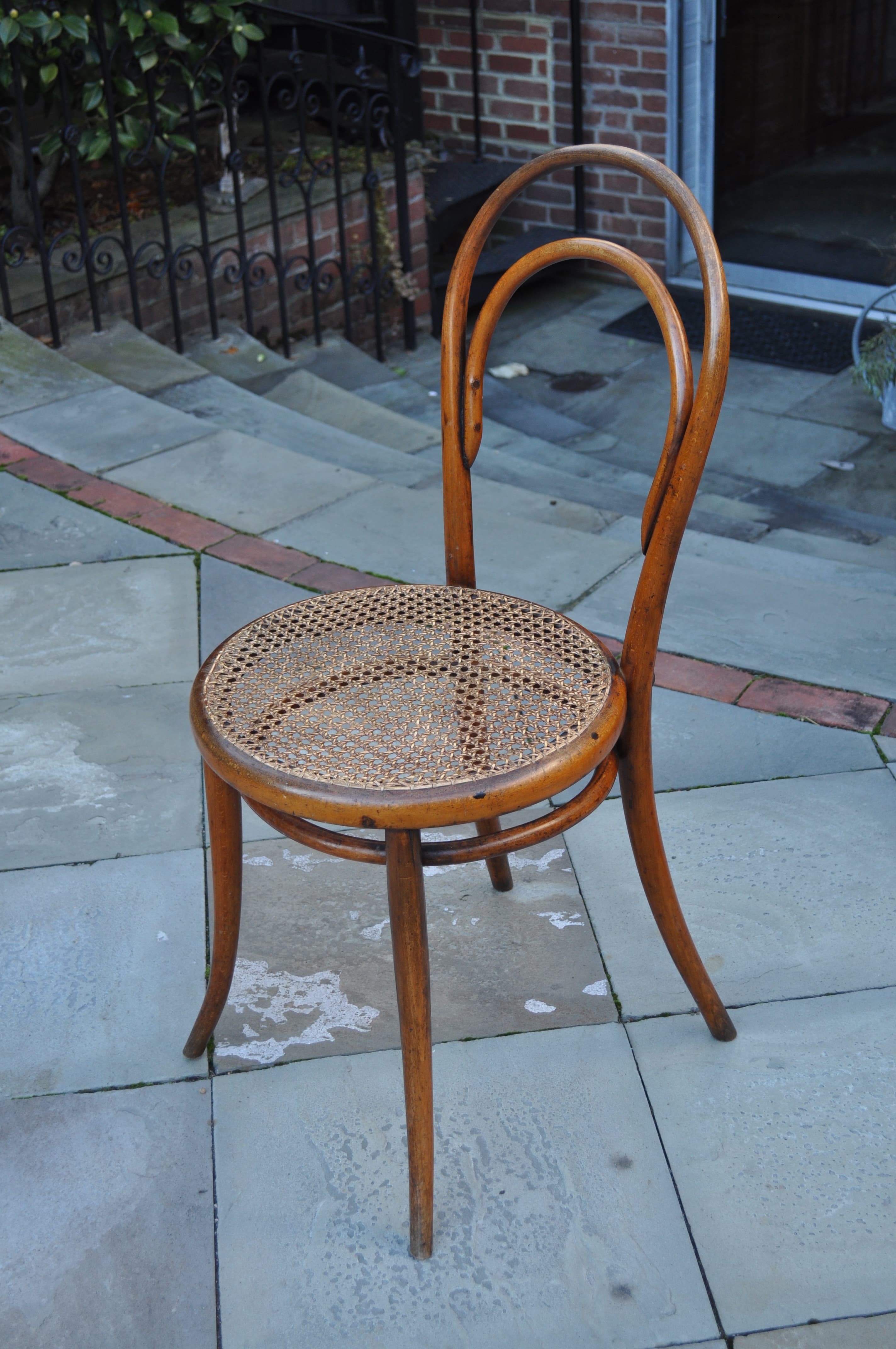
Michael Thonet’s No. 14 brought bentwood furniture into ordinary public life. Introduced in 1859, the café chair evolved into a small set of wooden parts joined with screws. Museum accounts place that simple construction inside a larger industrial system: repeatable parts, economical transport and assembly near the customer.
DOCUMENTED CONTEXT
After Novelty
The Design Museum describes an evolving construction, with solid wood and screws replacing earlier glued laminations. Vitra’s account explains how standardised components travelled compactly and were assembled at sales outlets. The achievement was a repeatable object that could enter everyday settings far beyond its workshop.
WHV INTERPRETATION
How It Holds
The frame and the seat do different jobs. That separation gives wear a place to be addressed, instead of making every worn surface a reason to replace the whole object. Today Thonet advertises a repair service. The meaningful question for an owner is whether that service, or a competent local repairer, can actually return this particular chair to safe use.
WHV INTERPRETATION
Under Pressure
A service page establishes an available route to enquiry; it does not establish the condition of an old chair or guarantee that a repair is feasible. Loose joints, damaged timber, replaced parts and a seat that no longer carries weight need individual assessment. A recognisable silhouette cannot answer those questions.
WHV INTERPRETATION
The Cost of Keeping
Someone must inspect the chair, find the right skill, arrange the work and decide whether the result justifies its cost. Transport, labour and time away from use can matter more than the replacement material. WHV has not obtained a repair quotation or tested the photographed chair. This reading therefore makes no promise about repair cost, safety or resale price.
WHV INTERPRETATION
What Can Be Applied Elsewhere
When choosing an object, ask what is most likely to wear out and how that part returns to use. A separable part is only the beginning: information, tools, skills and continuing service complete the system. The same question is useful for clothing, appliances and buildings, but each needs its own evidence.
WHV INTERPRETATION
Evidence and Limits
Two museums support the design history; the manufacturer documents its own repair offer. WHV’s conclusion connects those facts and is presented as an interpretation. We have no longitudinal ownership file, comparative life-cycle study or physical inspection. The photographed chair illustrates the model and visible wear, not a documented restoration commissioned by WHV.
THE LIMIT OF THE CLAIM
What this does not prove.
Historical affordability and mass production do not establish present affordability. The existence of a repair service does not make every damaged example repairable.
A reading of a design and its service culture, not a buying recommendation, authenticity check, safety inspection or investment forecast.
The five criteria
Lived Value
The museum record places the model in everyday café use, while avoiding a claim about universal comfort or a particular owner.
Enduring Logic
Repeatable construction and the continuing repair route support a bounded interpretation of return to service.
Consequence
Repair entails assessment, skilled labour, transport and the possibility that a particular chair cannot safely be restored.
Evidence Over Time
Independent museums document the nineteenth-century design; the current service source adds a present-day institutional reference, not an individual life history.
Continuity
The mechanism can be renewed through repair where condition, skills and compatible parts permit; no blanket repair guarantee is made.