DISCOVERY / Art Nouveau Ceramics & Material Experiment
The colour that will not stay still.
Zsolnay’s eosin glaze makes light part of a ceramic object. Its shifting surface rewards a different kind of attention from a painted pattern.
Published 28 October 2026 · WHV · Public-source editorial note
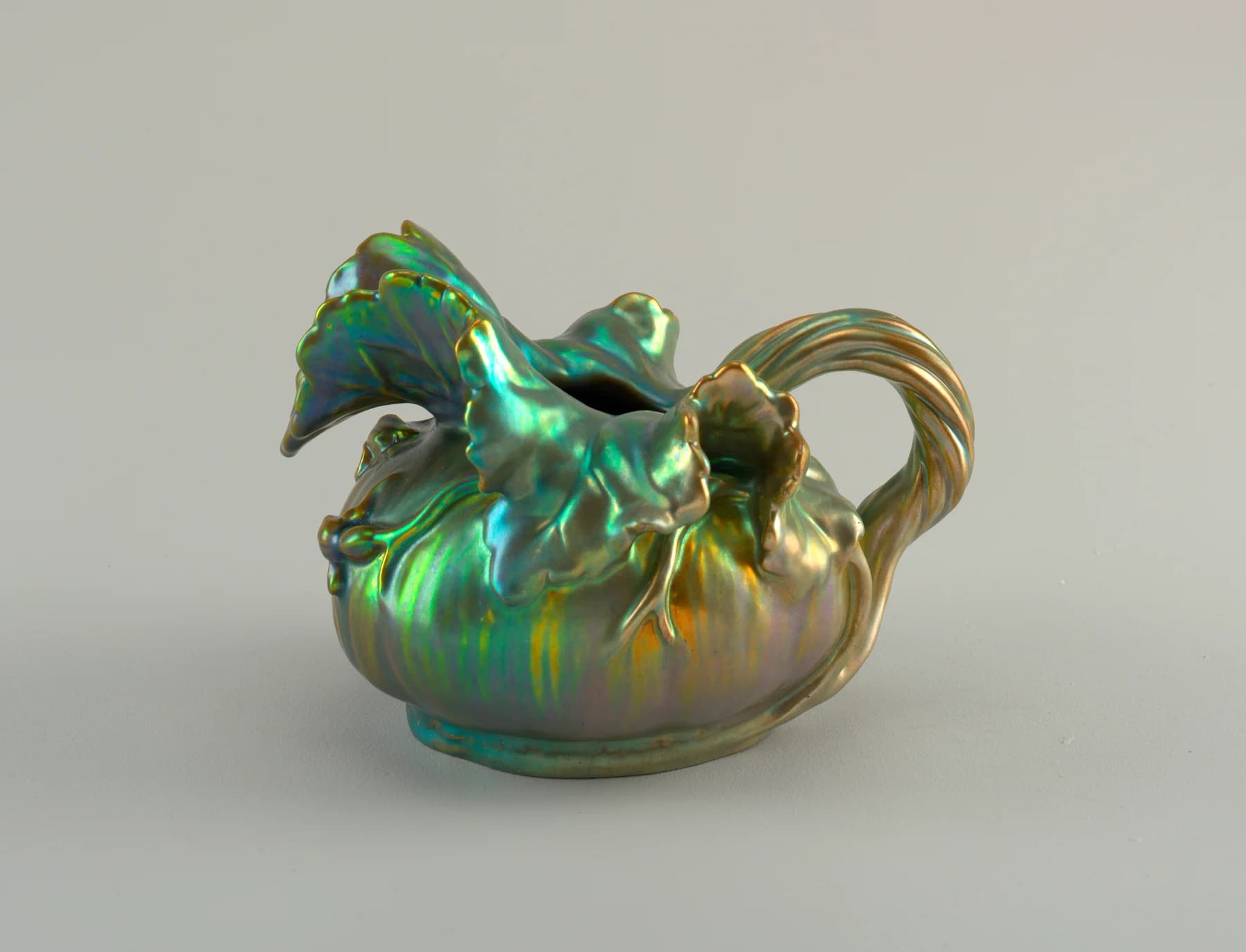
An eosin-glazed ceramic does not present the same surface from every position. Green, gold and other metallic-looking tones shift as light meets the form. That change is the reason to look again. The object is not merely carrying a pattern. Its surface and shape are participating in the same effect.
The glaze is not simply a colour
Zsolnay traces eosin’s development to experiments involving Vilmos Zsolnay, chemist Vince Wartha and Lajos Petrik in the late nineteenth century. The technique became closely associated with the factory’s Art Nouveau work. The pictured Leaf Pitcher, made around 1901 and held by Cooper Hewitt, turns a leaf-like spout and gathered handle into an organic whole. The museum’s published exhibition account attributes its design to Lajos Mack.
The enduring value is a specialised material language rather than a generic claim that old ceramics are valuable. A sculptural form can become more expressive because its glaze changes how light travels over it. The factory continues to offer eosin objects, making it possible to explore the effect beyond historical museum collections. A contemporary piece and an attributed early work remain different propositions.
A factory name is only a beginning
Study the shape, marks, documented designer and production period of a particular example. Ask a ceramic specialist about restoration, cracks and surface damage, which may be difficult to judge from a brightly lit sales photograph. Compare images taken from more than one angle. Iridescence is a reason for looking closely, not a substitute for provenance or a guarantee of authenticity, rarity or financial appreciation.
Source and context.
Zsolnay: the history of eosin ↗
Cooper Hewitt: Iridescence, including the circa-1901 Leaf Pitcher ↗
Art & Object: Cooper Hewitt’s iridescence exhibition and Leaf Pitcher attribution ↗
Zsolnay: current Art Nouveau collection ↗
The photograph depicts Cooper Hewitt’s circa-1901 Leaf Pitcher, not a current retail product. The design attribution and date belong to that documented object and cannot authenticate another Zsolnay piece.
Source checked 28 October 2026. WHV interpretation is distinct from the source’s account.
Explore Art Nouveau Ceramics & Material ExperimentFOLLOW YOUR CURIOSITY
Where this leads.
Different subjects. A reason to connect them.
Continue the idea
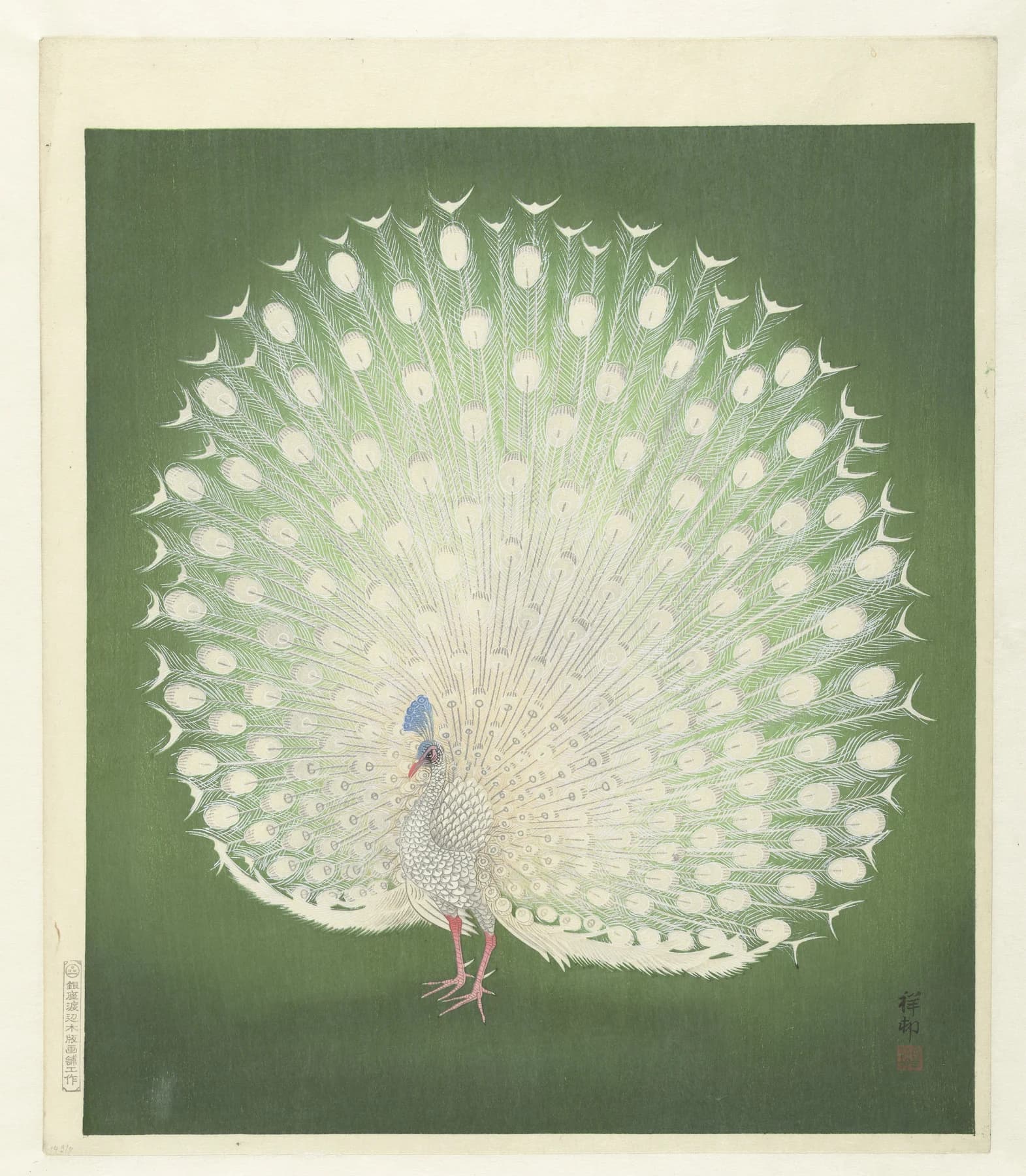
A peacock built from printed colour.
Compare two decorative traditions where a carefully organised surface rewards looking beyond the first impression.
Japanese Prints & Ways of Seeing
Read the story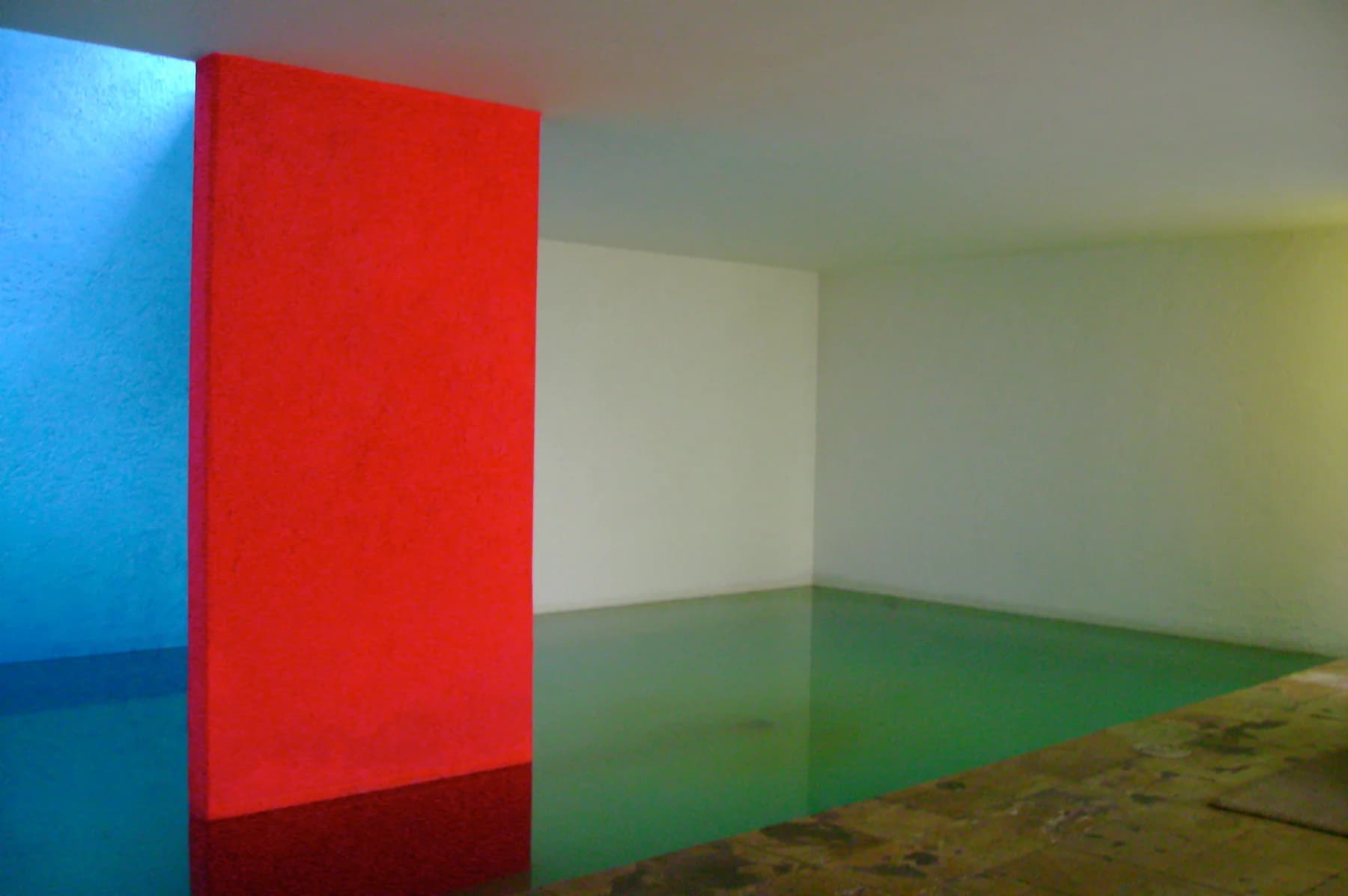
Across the WHV world
Colour that becomes a room.
Colour and reflected light become an architectural experience rather than the surface of a hand-held object.
Domestic Architecture & Spatial Experience
Read the story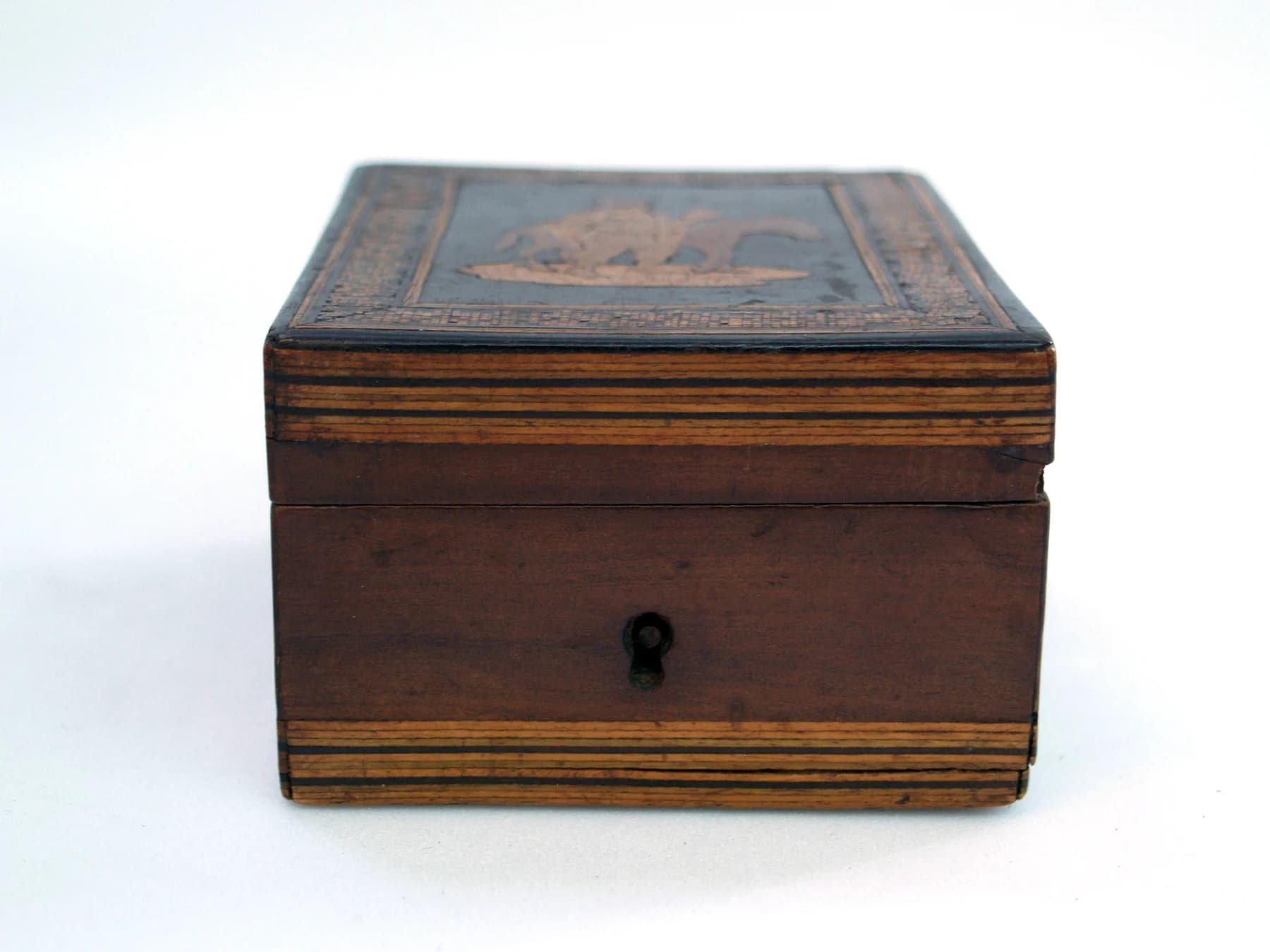
An unexpected connection
The picture inside the wood.
Another collecting field makes the technique behind a small decorative object central to its appeal.
Wood Mosaic & Decorative Arts
Read the story