DISCOVERY / Turned Wood & Living Folk Craft
The doll whose head has a voice.
A Naruko kokeshi is turned, fitted and painted by a maker. The small sound at its neck hints at a whole craft tradition.
Published 27 September 2026 · WHV · Public-source editorial note
A Naruko kokeshi can be small enough to hold in one hand. Turn its head and a characteristic squeak may come from the way wood meets wood. That sound is a useful clue: the object is constructed, not merely decorated. A simple silhouette has acquired a precise local vocabulary.
The head and the hand
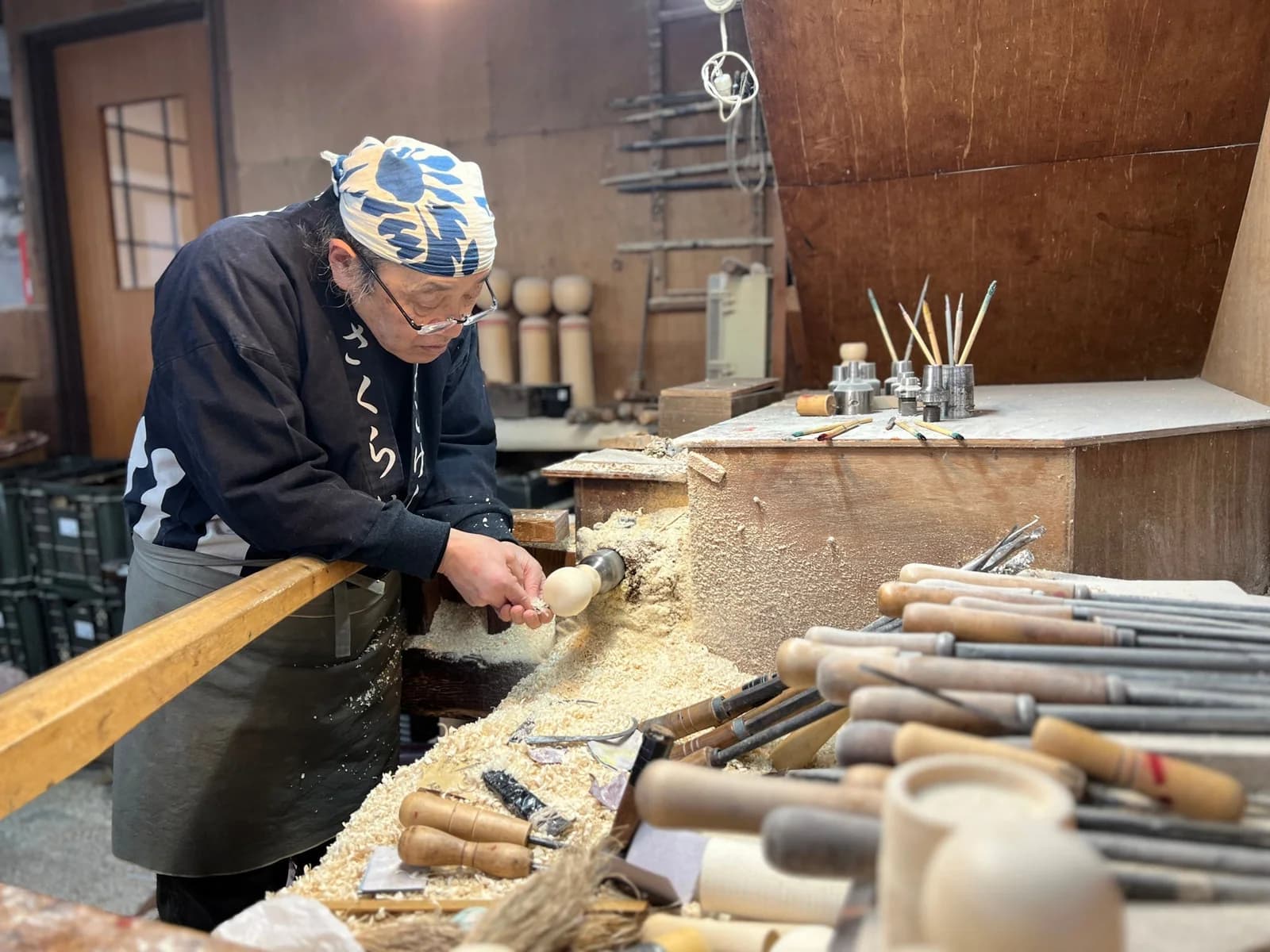
The Japanese traditional-craft association describes the head and body being turned separately, then fitted together. Chrysanthemum motifs and the maker’s brushwork give the surface another layer of identity. Its profile of the craftsman Hideo Onuma even records the making of specialised tools. At another Naruko workshop, a firsthand visitor documented Akihiro Sakurai working at a lathe among unfinished forms and finished dolls.
These makers are not interchangeable, and a photograph of one workshop cannot authenticate a doll attributed to another. That is part of the pleasure of looking. A body’s proportion, a painted flower and a maker’s habits become questions to investigate rather than generic signs of Japanese charm. Contemporary work makes the tradition available as a living conversation, not only as an elusive antique.
Meet a maker before an antique
Begin with a named workshop and ask what can be seen, ordered or purchased now. If an older doll interests you, establish its maker, condition and history before attaching importance to age alone. The sound at the neck will not tell you its market value. It can, however, remind you how much knowledge sits inside a modest wooden object.
Source and context.
Association for the Promotion of Traditional Craft Industries: Naruko kokeshi ↗
Miyagi Prefecture: regional kokeshi traditions ↗
Okan Arts: a visit with Akihiro Sakurai in Naruko ↗
Sakurai Kokeshi: current workshop ↗
The photograph shows Akihiro Sakurai in his Naruko workshop, not Hideo Onuma or a specific doll offered for sale. WHV has not handled, authenticated or priced a kokeshi. The sound and construction described are characteristic of the tradition, not a test for every individual example.
Source checked 27 September 2026. WHV interpretation is distinct from the source’s account.
Explore Turned Wood & Living Folk CraftFOLLOW YOUR CURIOSITY
Where this leads.
Different subjects. A reason to connect them.
Continue the idea
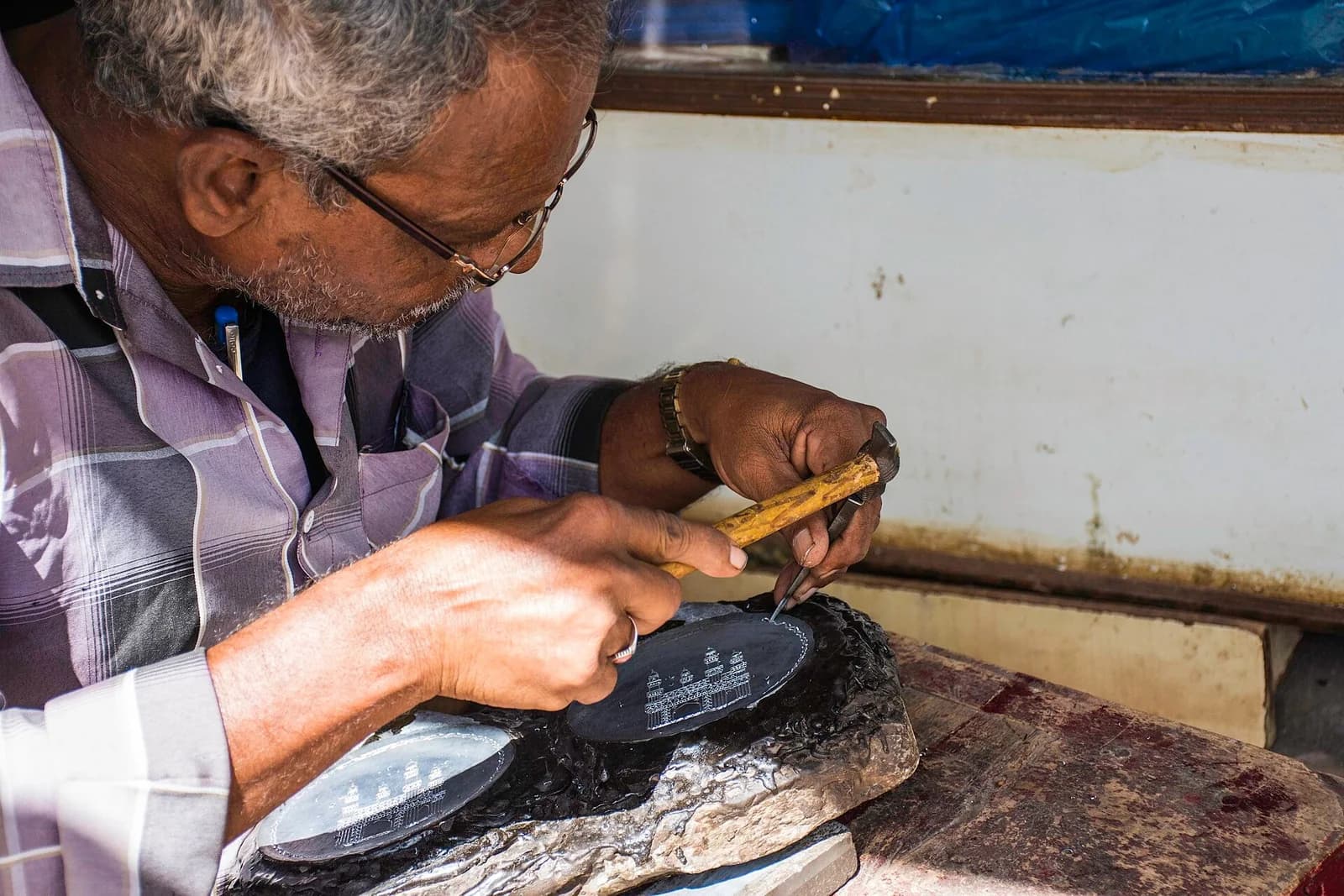
The silver is not the whole story.
Two regional crafts become richer when technique and the identity of a maker are both visible.
Metal Inlay & Material Transformation
Read the story
Across the WHV world
A garment with a family memory.
A wearable tradition makes another case for keeping regional making knowledge in active use.
Regional Dress & Living Textile Knowledge
Read the story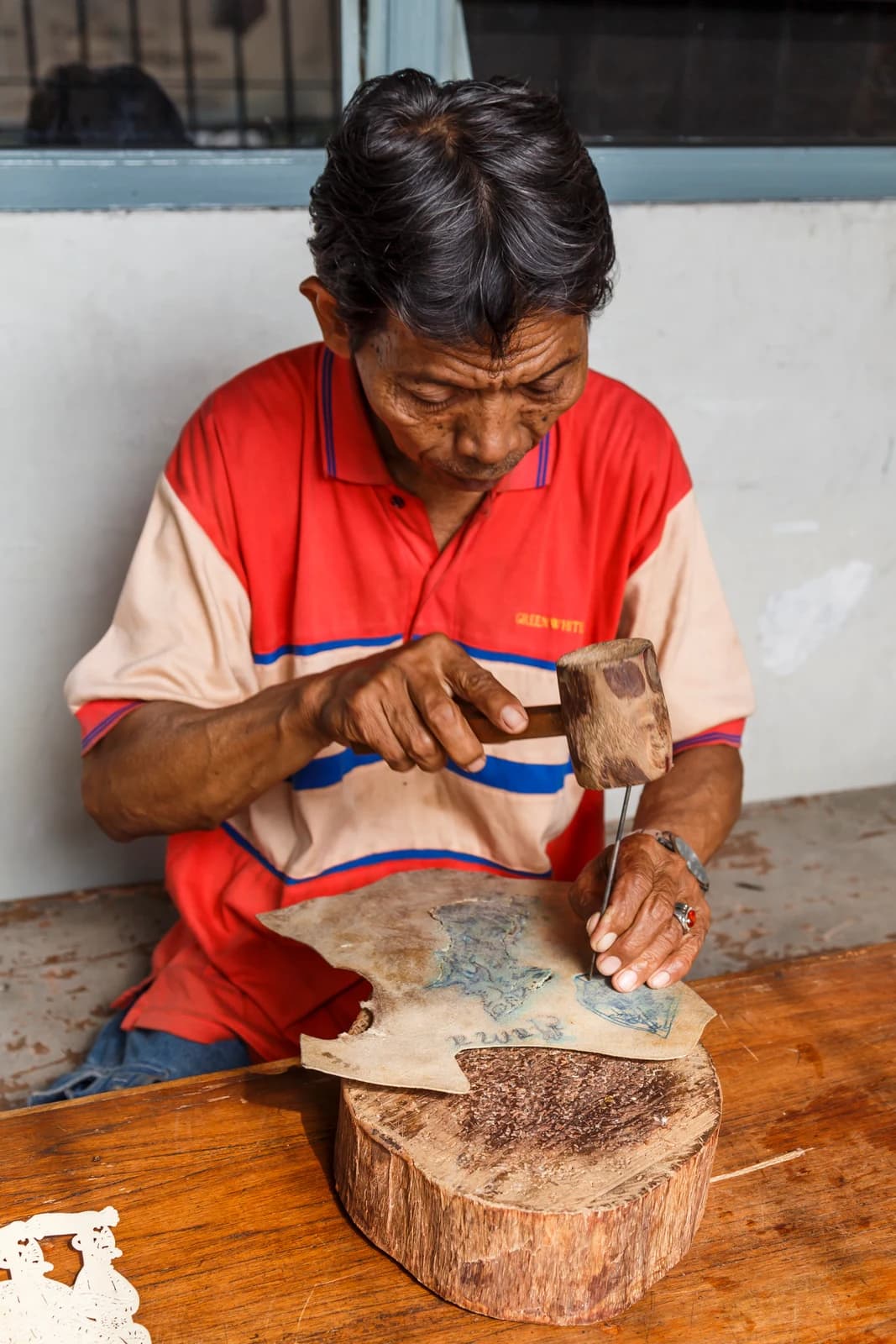
An unexpected connection
The object is only half the art.
Another deceptively simple object carries meaning through the practice around it.
Shadow Puppets & Performing Traditions
Read the story