DISCOVERY / Industrial Design & Domestic Audio
The machine that stopped hiding.
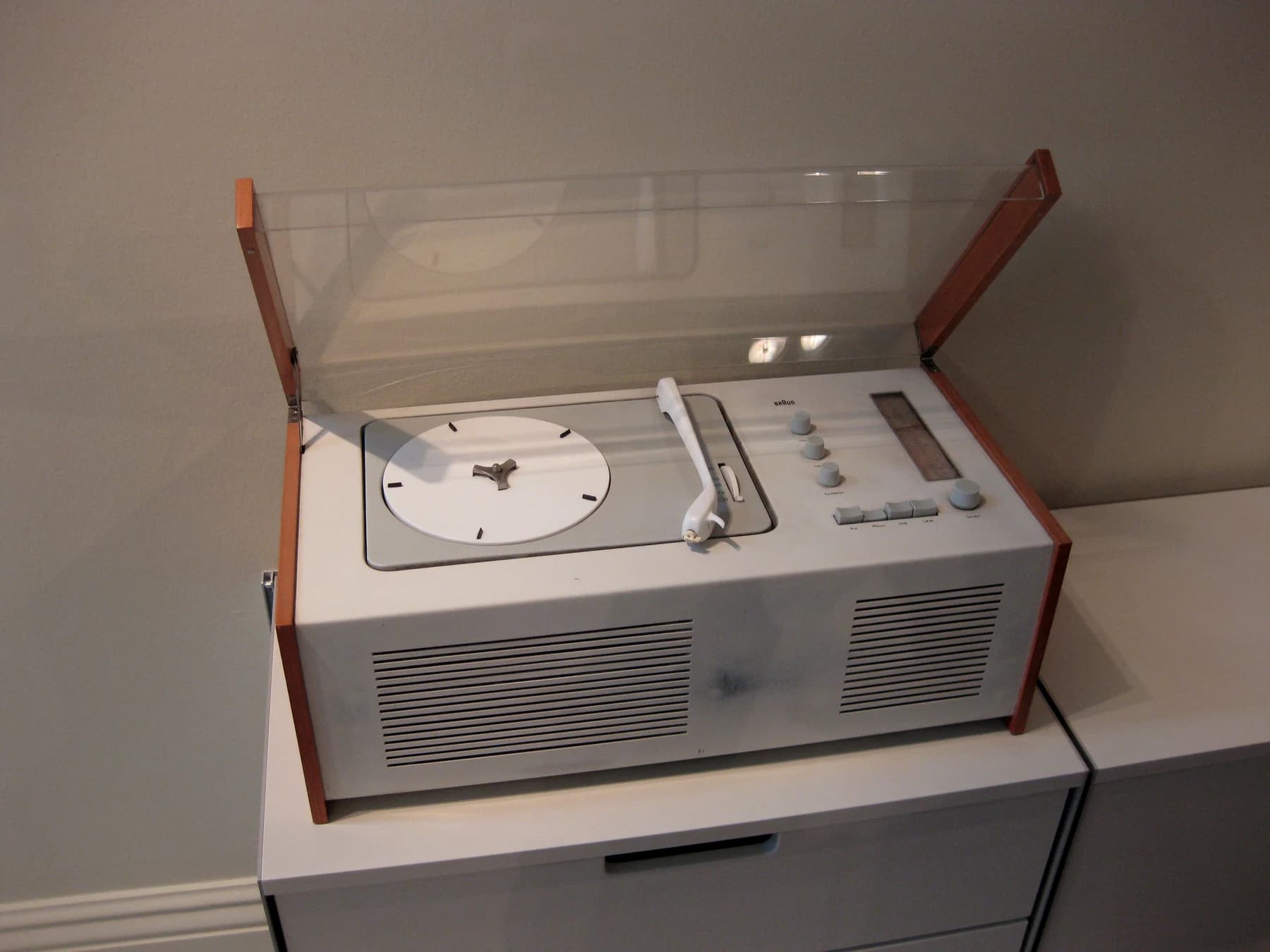
Hans Gugelot and Dieter Rams gave the Braun SK 4 a transparent lid. A radio and record player no longer needed to pretend to be a piece of traditional furniture.
Published 22 October 2026 · WHV · Public-source editorial note
The small revolution is above the turntable. Instead of concealing the machinery beneath a furniture-like lid, the Braun SK 4 lets it remain visible. The record, tonearm and controls belong to the room. Looking at the object gives a first explanation of what it does.
An object that explains itself
Designed in 1956 by Hans Gugelot and Dieter Rams, the radio-phonograph combined painted metal, wood and a transparent plastic cover. MoMA’s collection records the SK 4/10 and both designers. The family resemblance to later restrained electronics is easy to recognise, but that familiarity can obscure how decisive the departure from decorative domestic cabinetry once was.
What holds value here is a design argument that can still be understood without an instruction in prestige. Materials have different jobs, the controls are organised, and the working surface is not disguised. A surviving machine can be studied, restored and lived with. None of that requires pretending that its original audio performance must outperform current equipment.
Separate the design from the condition
If considering ownership, identify the exact model and obtain a specialist assessment before powering it up. Electrical safety, the pickup, turntable mechanism, cabinet and lid all deserve separate attention. Ask what has been replaced and retain the repair record. A museum attribution establishes the design’s history, not the authenticity, reliability or financial prospects of the example offered for sale.
Source and context.
MoMA: Braun radio-phonograph, model SK 4/10, 1956 ↗
Hans Gugelot archive: Braun SK 4 ↗
SK 4 family variants and later Braun models are not interchangeable. The archival photograph is not evidence of electrical safety or current working condition.
Source checked 22 October 2026. WHV interpretation is distinct from the source’s account.
Explore Industrial Design & Domestic AudioFOLLOW YOUR CURIOSITY
Where this leads.
Different subjects. A reason to connect them.
Continue the idea
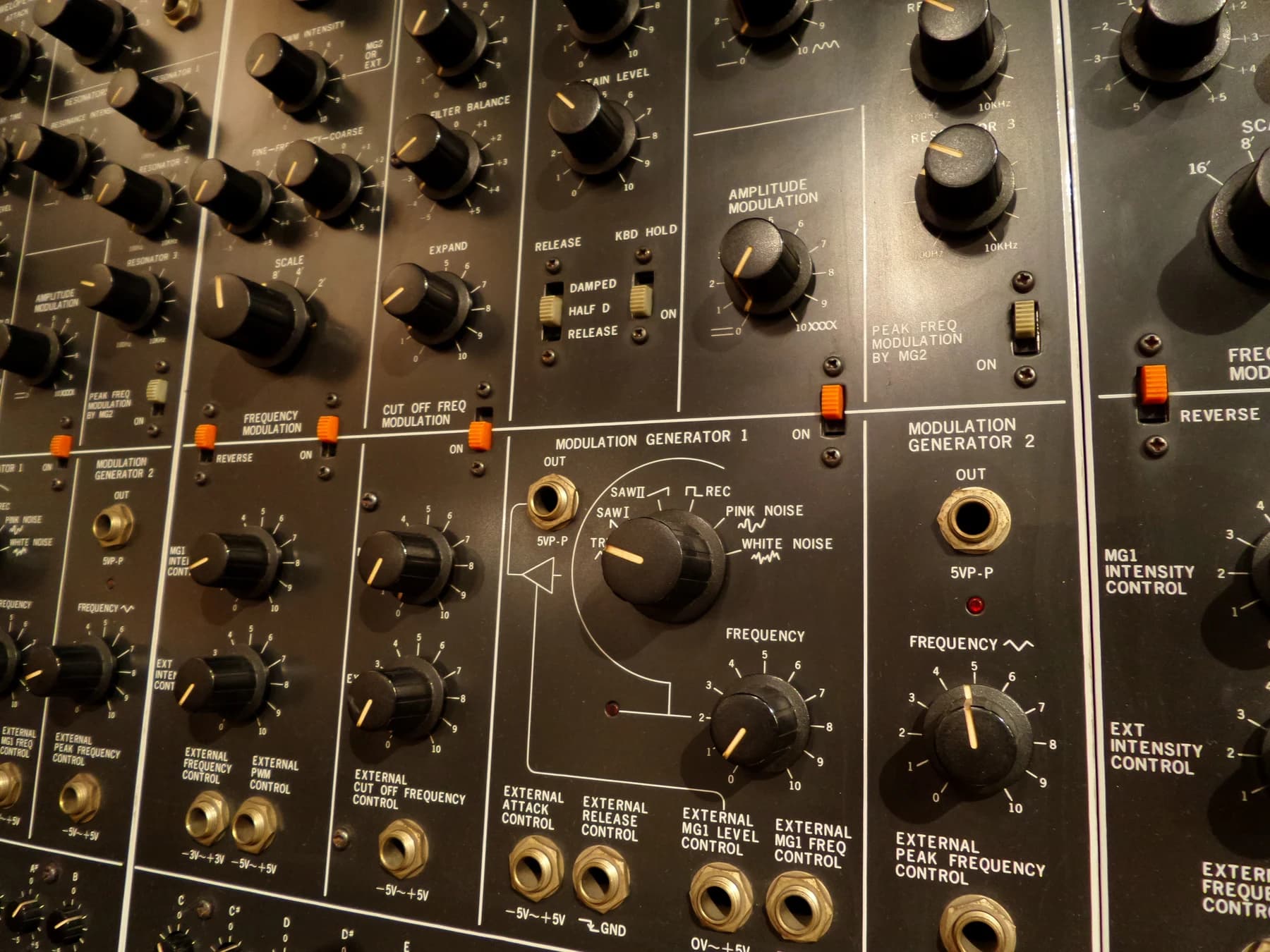
A synthesizer with room for other scales.
Compare two very different answers to making the working parts of an audio object understandable.
Electronic Instruments & Creative Possibility
Read the story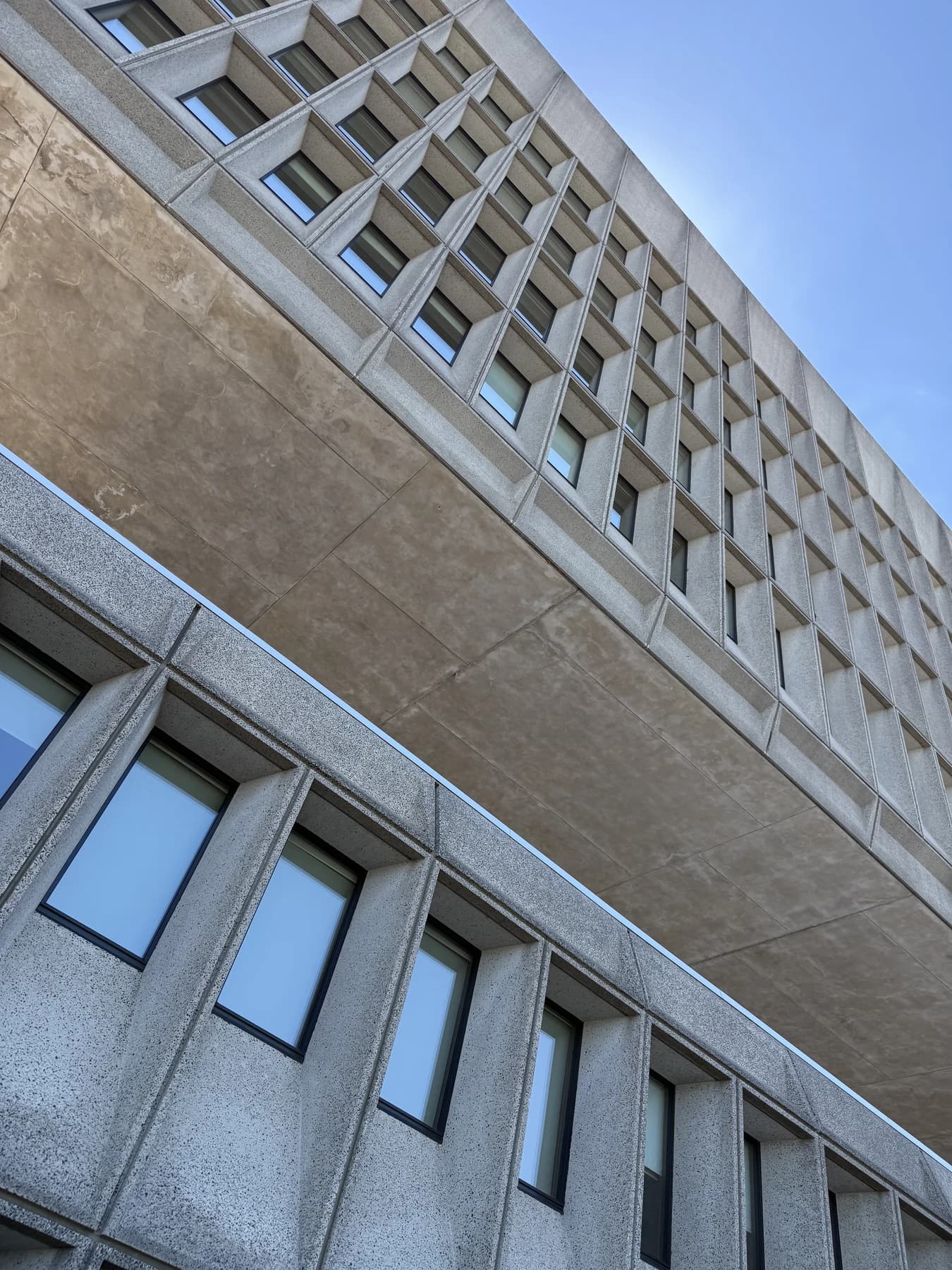
Across the WHV world
A second life inside Breuer’s concrete.
A restored building extends the distinction between keeping an identity and keeping every component unchanged.
Adaptive Reuse & Hospitality
Read the story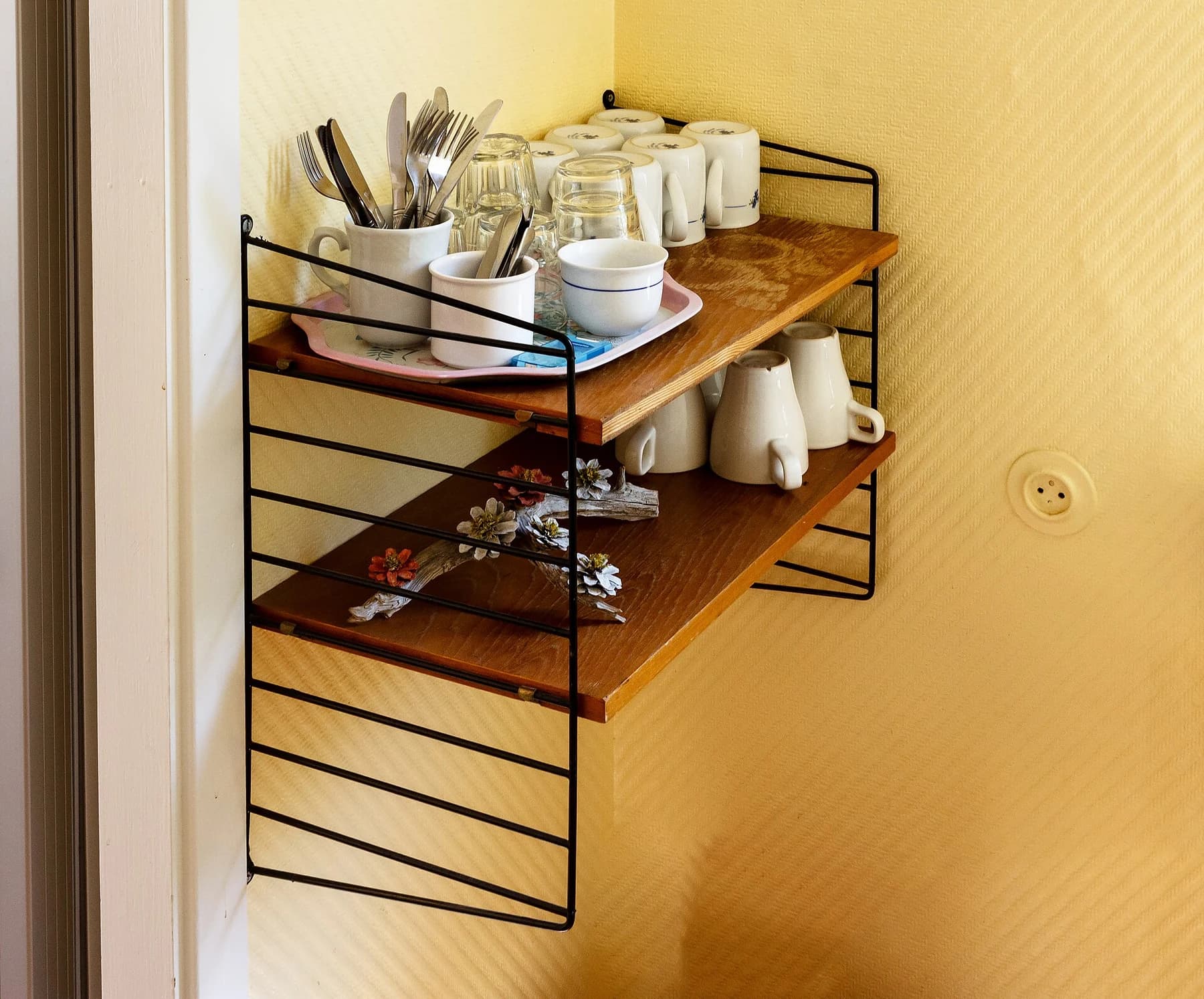
An unexpected connection
The shelf that leaves the next move open.
Wire shelving brings the same question of visible structure and everyday usefulness into another part of the room.
Furniture & Adaptable Interiors
Read the story