DISCOVERY / Rare Objects
A window into an asteroid.
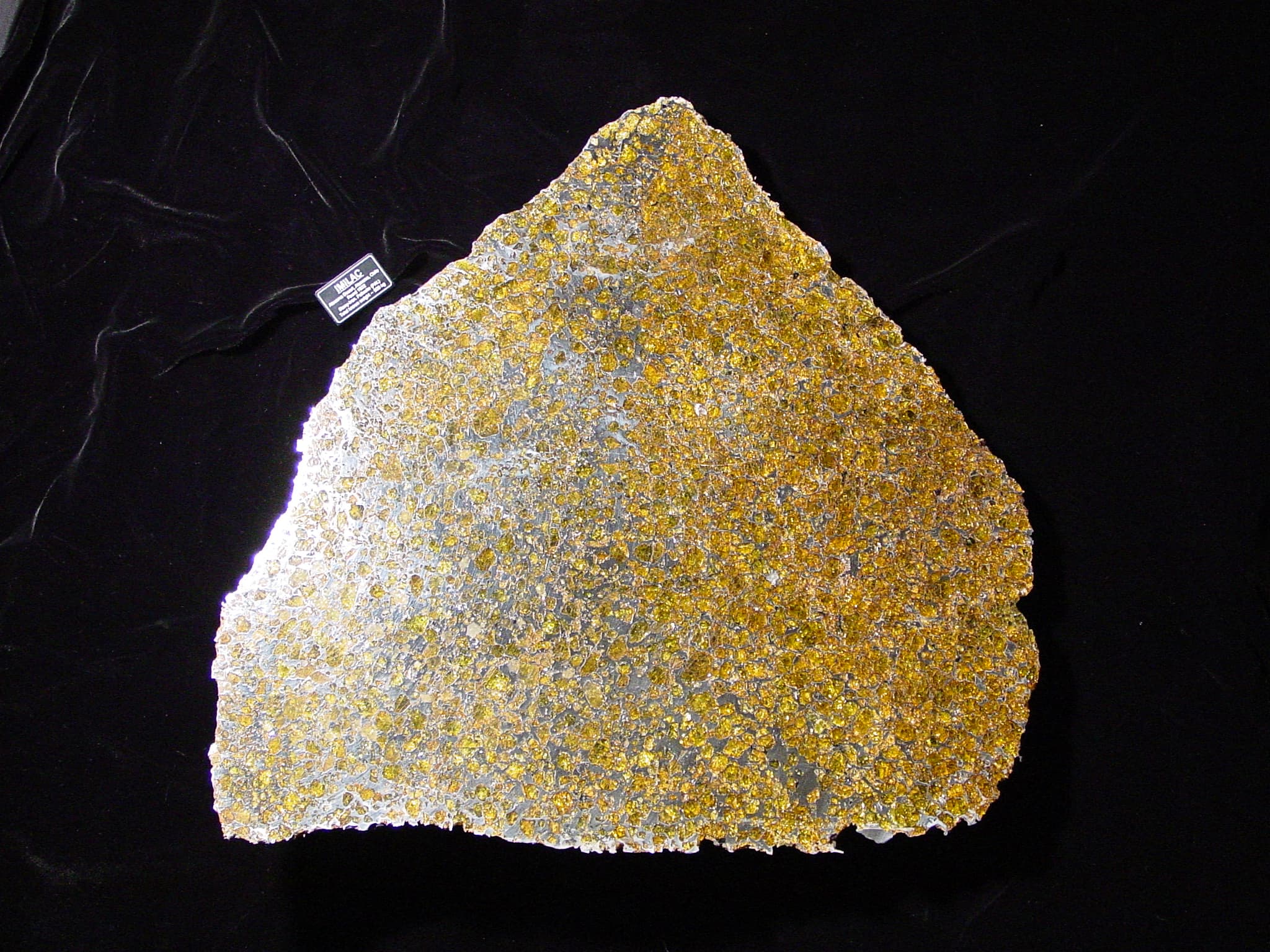
Olivine crystals suspended in metal: the Imilac meteorite makes deep time visible at the scale of an object.
Published 12 September 2026 · Public-source editorial note
A cut surface can look like an arrangement of small illuminated windows. In Imilac, the Natural History Museum identifies olivine crystals within iron and nickel metal. This is a pallasite meteorite: material associated with the early life of our solar system.
The museum’s account places its formation around 4.5 billion years ago and explains how pallasites preserve evidence from bodies that melted and collided. The pattern is not an artisan’s invention. Its beauty and its scientific information occupy the same surface.
That makes it a WHV subject before it becomes a collectible. Looking, learning and visiting a collection are forms of access too. For any privately offered specimen, identity, documentation, lawful provenance and preservation would need their own investigation; resemblance is not authentication.
Source and context.
Natural History Museum, London — The Imilac meteorite ↗
This reading concerns the museum’s documented Imilac material, not a specimen offered for sale. It establishes neither the authenticity, legal status nor market value of any privately held fragment. No acquisition or financial recommendation is made.
Source checked 12 September 2026. WHV interpretation is distinct from the source’s account.
Explore Rare Objects