DISCOVERY / Public Architecture
Niterói, the museum starts on the ramp.
Oscar Niemeyer’s approach to the museum keeps changing the relationship between the building and Guanabara Bay.
Published 4 November 2026 · WHV
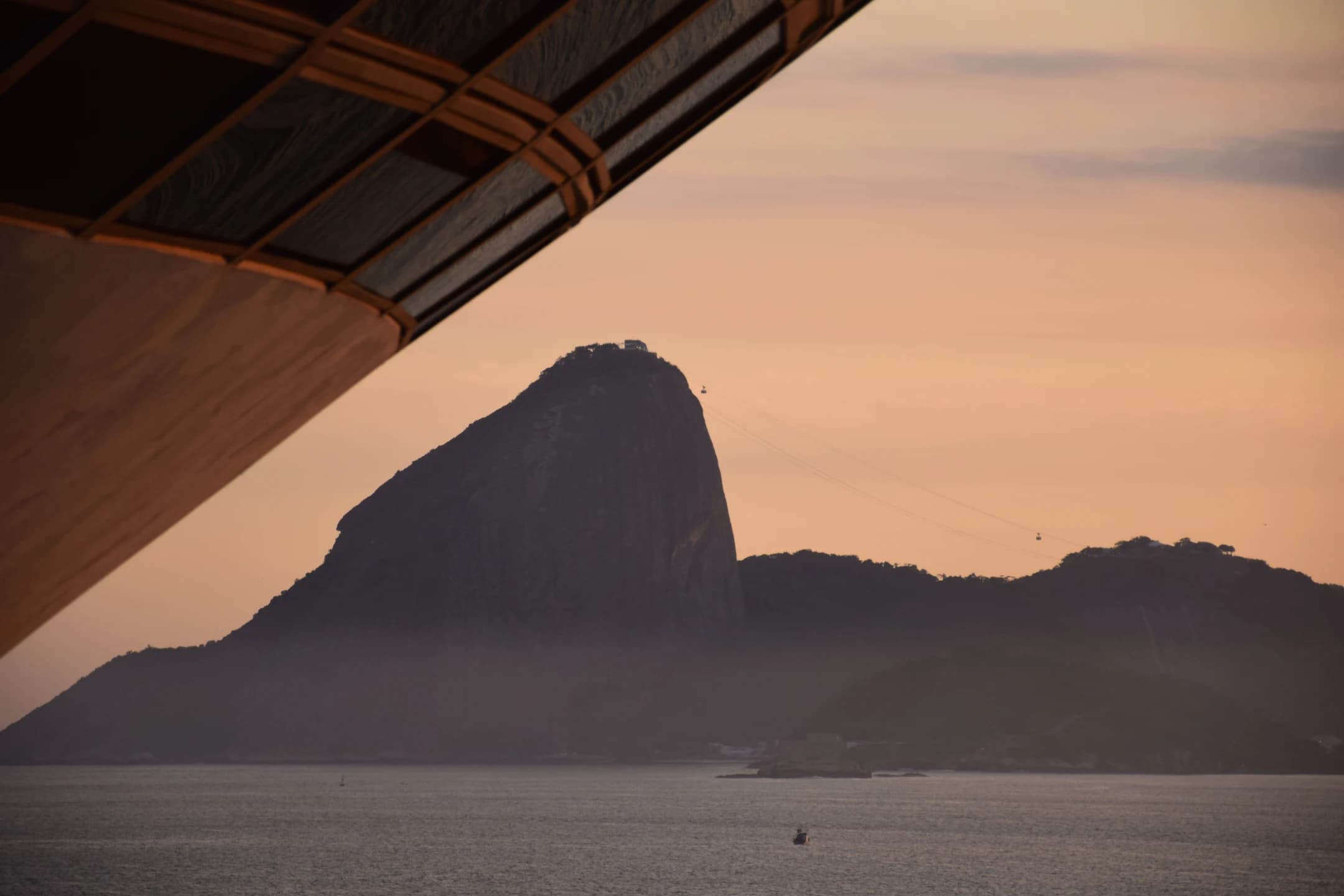
The best way to read Oscar Niemeyer’s museum in Niterói is to arrive slowly. The building’s outline travels well in photographs, but the approach gives it a different rhythm. As the ramp rises and bends, the bay moves in and out of view. Even the stretch beneath the museum, where the building frames Sugarloaf across the water, is part of the experience.
The municipal record credits Niemeyer with the design and places the museum on the Boa Viagem headland. That siting explains much of what a frontal photograph leaves out. The same curve that gives the building an identity at a distance also gives a visitor something to do at close range. There is time to turn back towards the water before entering the galleries.
Allow time for that approach and look for the bay again from inside. Check gallery access and the current exhibition with the museum before crossing from Rio. The visit rewards a small change in habit. Give the arrival as much attention as the object you came to see.
Evidence & sources.
- Niterói Department of Culture (opens source in a new tab)
- Municipal visitor guide (opens source in a new tab)
Scope of this reading
The photograph records the exterior and bay in 2020. Confirm current opening, exhibition and access arrangements with the museum.
Sources checked 4 November 2026.
FOLLOW YOUR CURIOSITY
Where this leads.

Continue the idea
Patina Osaka, two parks inside a tower.
Follow another building that changes the way you look at its surroundings.
Read the story Image: Hjart
An unexpected connection
At the Wadden Sea Centre, a roof that belongs to the marsh.
Read how the sequence of an arrival is shaped by the flat, tidal landscape near Ribe.
Read the story