DISCOVERY / Books & The Art of Printing
When the whole book is the work.
The Kelmscott Chaucer makes type, illustration and the printed page inseparable. Its lesson is available through close looking, even when the original is far beyond reach.
Published 21 October 2026 · WHV · Public-source editorial note
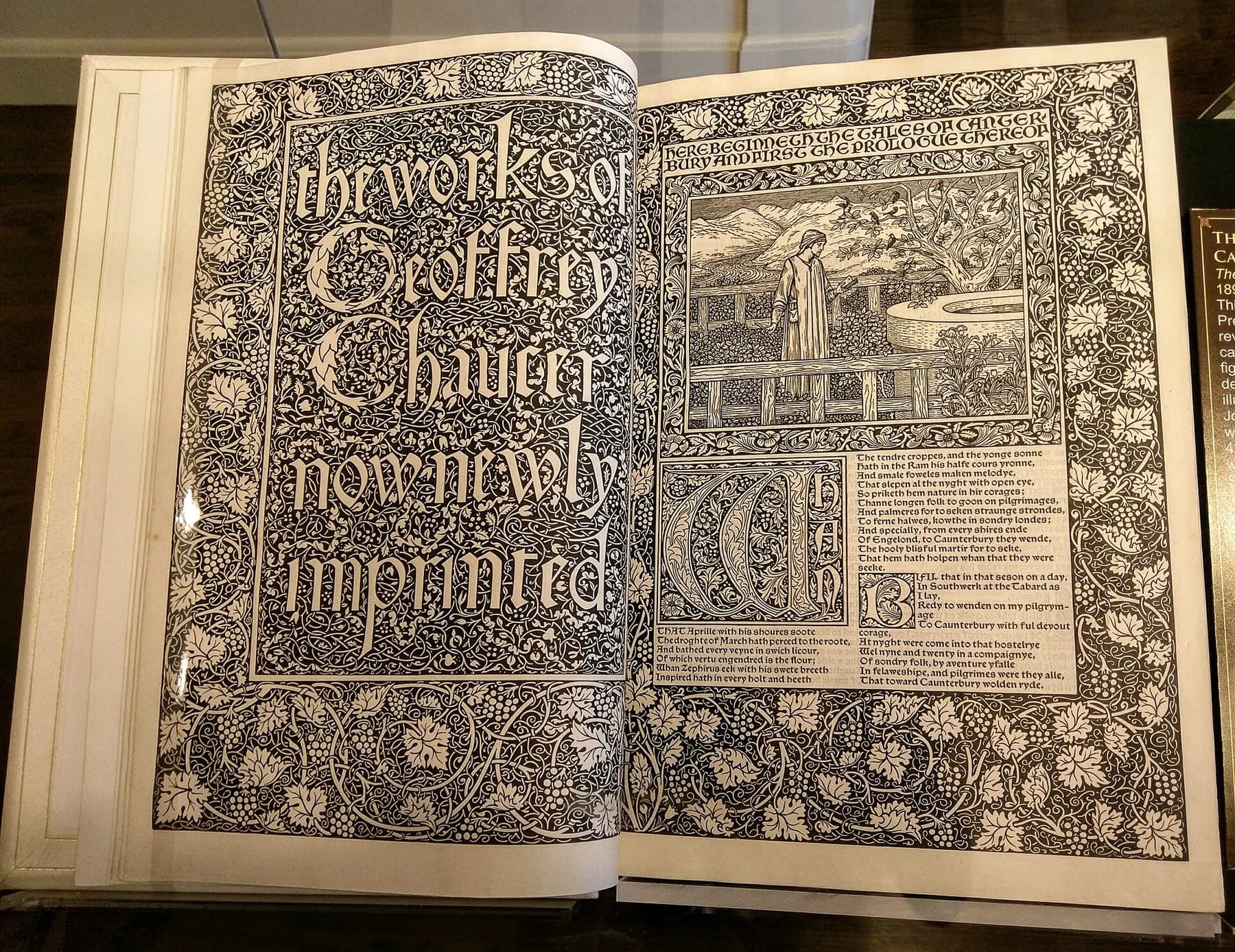
Open the Kelmscott Chaucer and the page behaves like a complete composition. Dark type, decorated initials, borders and images occupy the spread with unusual density. William Morris did not treat the book as a neutral container for Geoffrey Chaucer’s writing. The act of printing became part of the encounter.
The page is not neutral
Published in 1896, the edition brings Morris’s design together with eighty-seven illustrations by Edward Burne-Jones. Institutional accounts document a deeply collaborative undertaking in which drawings, engraving, typography and production had to work together. The result is more interesting than an isolated ornamental page because the relationships continue throughout the volume.
This is one of the occasions when a rare historical object earns its place on WHV by opening a practical idea. A book’s form can change the pace and texture of reading. You do not need to own an original to investigate that proposition. Library digitisation and clearly identified facsimiles provide routes into the design, though neither reproduces every aspect of handling the original paper and binding.
Separate the design from the particular copy
Compare complete spreads rather than only the most reproduced illustration. If considering a collectible copy, distinguish an original edition from a later facsimile and investigate completeness, binding, repairs and provenance with a specialist. Our photograph records the California State Library’s copy, not an item offered for sale. The lasting value begins with learning how a book can be designed as a whole.
Source and context.
William Morris Gallery: the 1896 Kelmscott Chaucer ↗
University of Maryland Libraries: the Kelmscott Chaucer and its making ↗
Bridwell Library: original and facsimile context ↗
The photographed copy belongs to the California State Library. Original editions and later facsimiles are different objects, and no price or resale assessment is offered.
Source checked 21 October 2026. WHV interpretation is distinct from the source’s account.
Explore Books & The Art of PrintingFOLLOW YOUR CURIOSITY
Where this leads.
Different subjects. A reason to connect them.

Continue the idea
A sculpture that takes time.
Compare an integrated printed object with an artwork whose separate technical elements become a changing spatial whole.
Kinetic Art & Spatial Sound
Read the story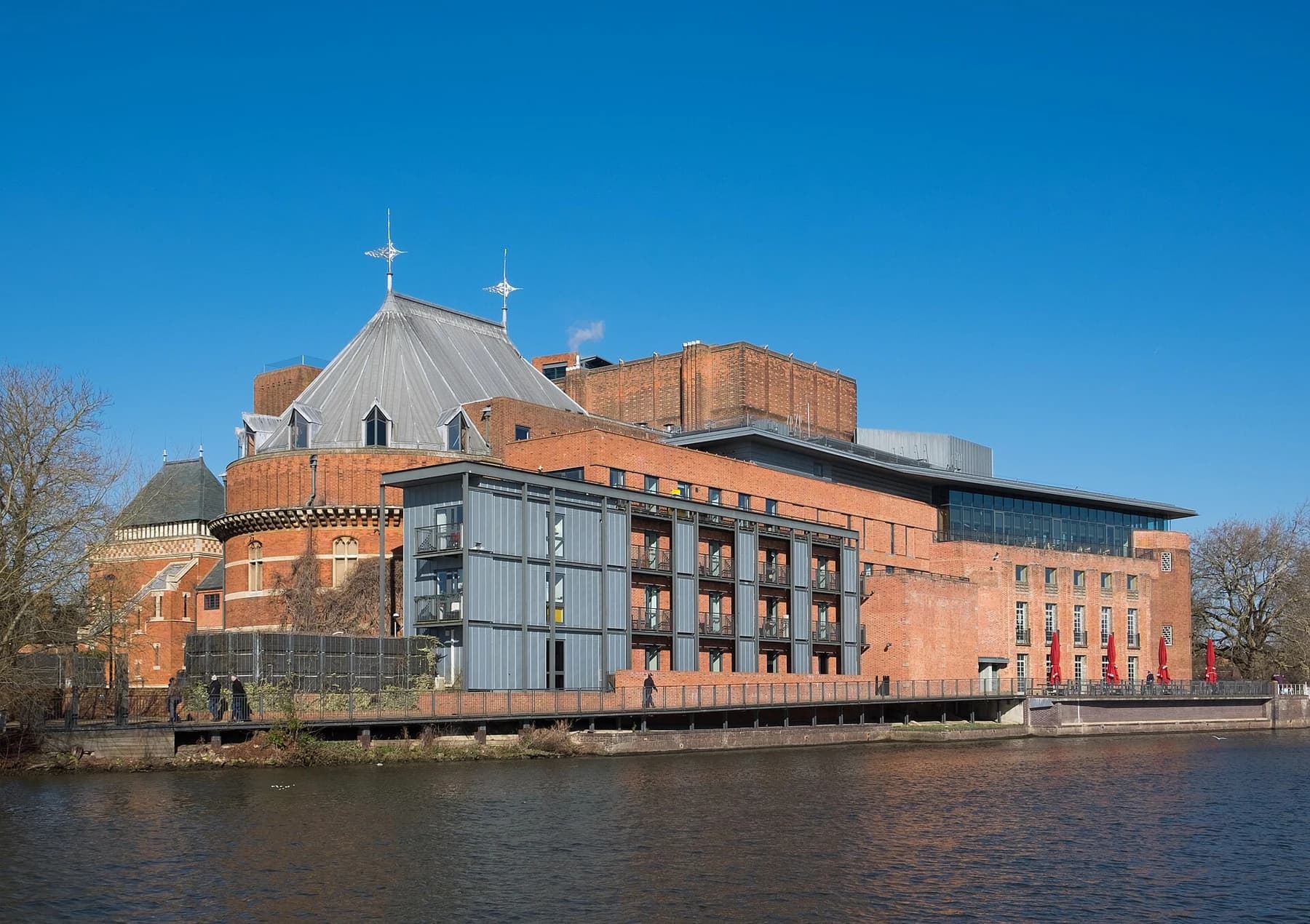
Across the WHV world
The work you do not see from your seat.
A theatre visit makes the collaborative labour behind another seemingly unified cultural work more visible.
Theatre & Living Production Knowledge
Read the story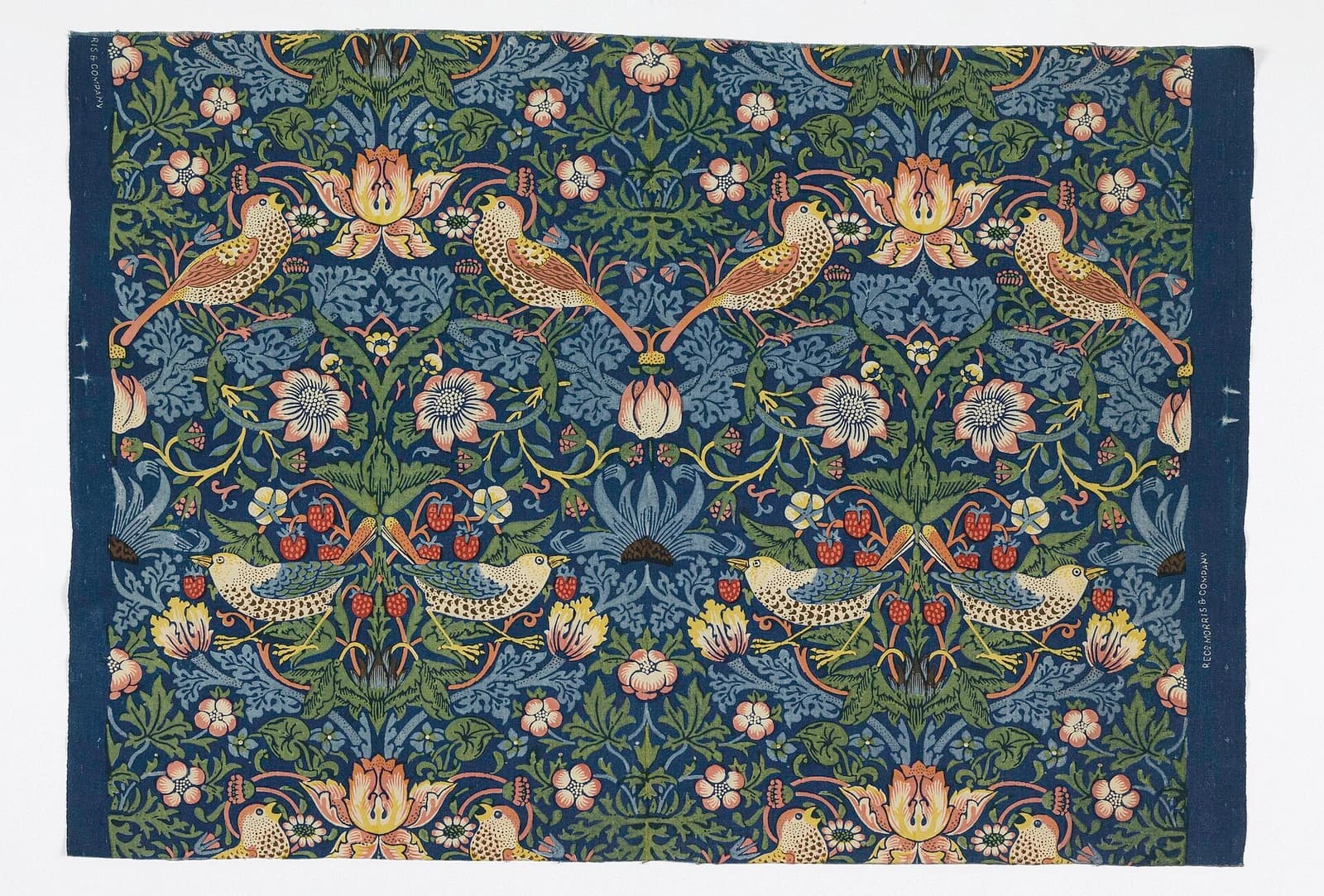
An unexpected connection
A pattern with an afterlife.
Another Morris design helps distinguish an enduring composition from the particular objects through which it is reproduced.
Printed Textiles & Design Archives
Read the story