DISCOVERY / Botanical Fibre Art
Kazuhito Takadoi’s Watage, a garden held in paper.
Grass and gold leaf turn the seed head into a work whose shadows keep changing.
 Image: Kazuhito Takadoi / jaggedart
Published 3 November 2026 · WHV
In Watage, grass becomes both a material and a way of drawing. Its fine strands cast shadows on the surface beneath them. Kazuhito Takadoi’s work gives the seed head enough structure to be read from a distance, then reveals its irregularities when you move closer.
The gallery records washi paper, grass and gold leaf. Takadoi’s broader practice grows out of horticulture and the plants he cultivates and gathers. That relationship is visible in the differences between the strands, which a uniform fibre would take away.
Look at the whole composition and then at the places where material rises from the paper. Ask the gallery about the condition of the specific work, framing and suitable light exposure. For a piece made from organic matter, a collector should understand how appearance may change as part of living with the work.
Evidence & sources.
- jaggedart: Watage (opens source in a new tab)
- Further documentation from kazuhitotakadoi.com (opens source in a new tab)
- Further documentation from ippodogallery.com (opens source in a new tab)
Scope of this reading
The work is documented in jaggedart’s catalogue. Availability and the condition of the object should be confirmed with the gallery.
Sources checked 3 November 2026.
FOLLOW YOUR CURIOSITY
Where this leads.
Continue the idea
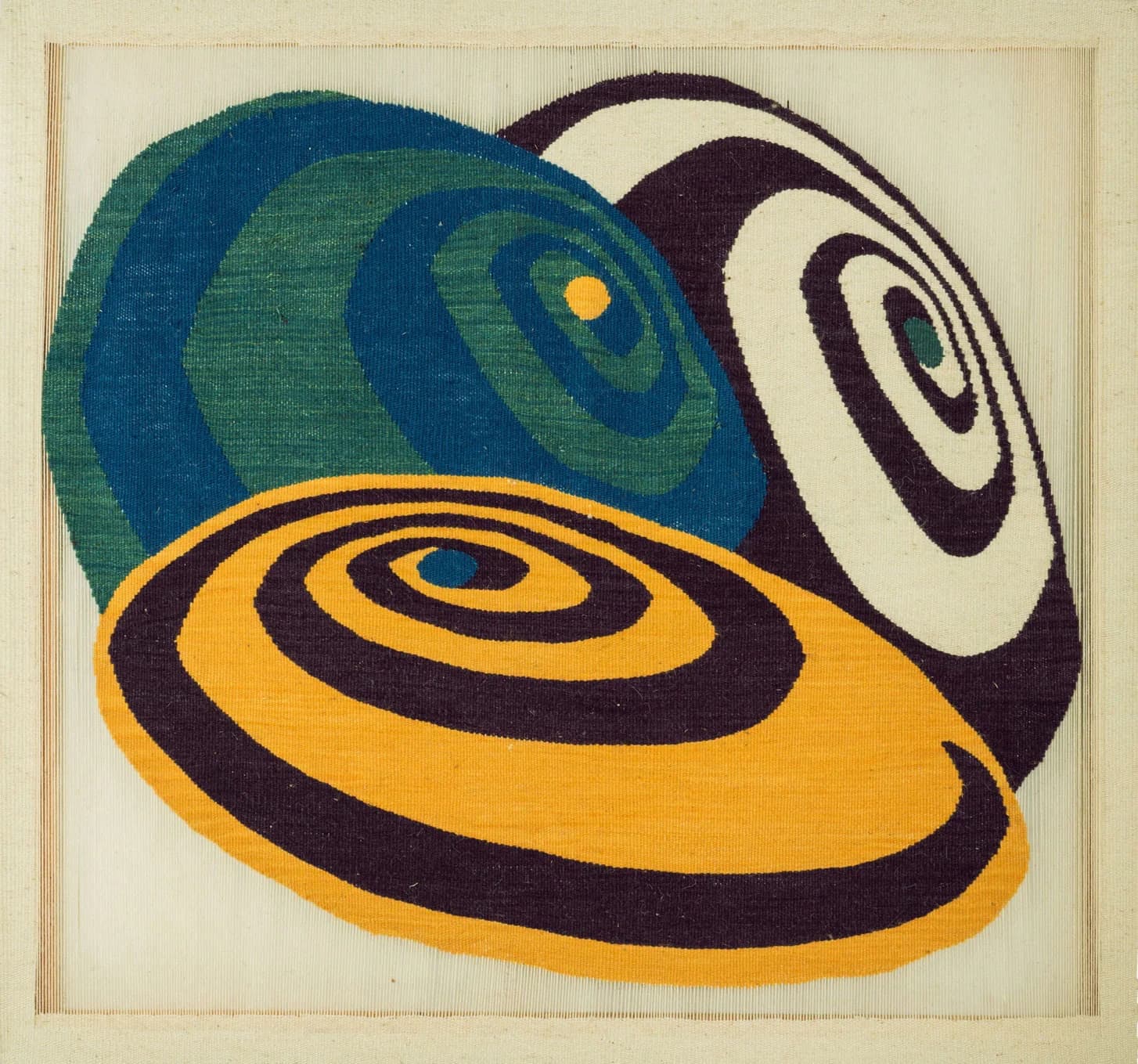
Belkıs Balpınar’s Orbits, the space between the threads.
Compare two artists who make the space around their fibres part of the composition.
Read the story Image: Niamh Barry / Maison Gerard
An unexpected connection
Niamh Barry’s Slow Crawl, bronze holding light.
Compare the effects of moving light on paper and on reflective bronze.
Read the story