DISCOVERY / Fashion Archives & Textile Invention
The dress whose structure is its decoration.
Fortuny’s Delphos puts pleating, weight and movement ahead of a rigid silhouette. It remains a useful lesson in how a garment can carry value through the intelligence of its construction.
Published 21 October 2026 · WHV · Public-source editorial note
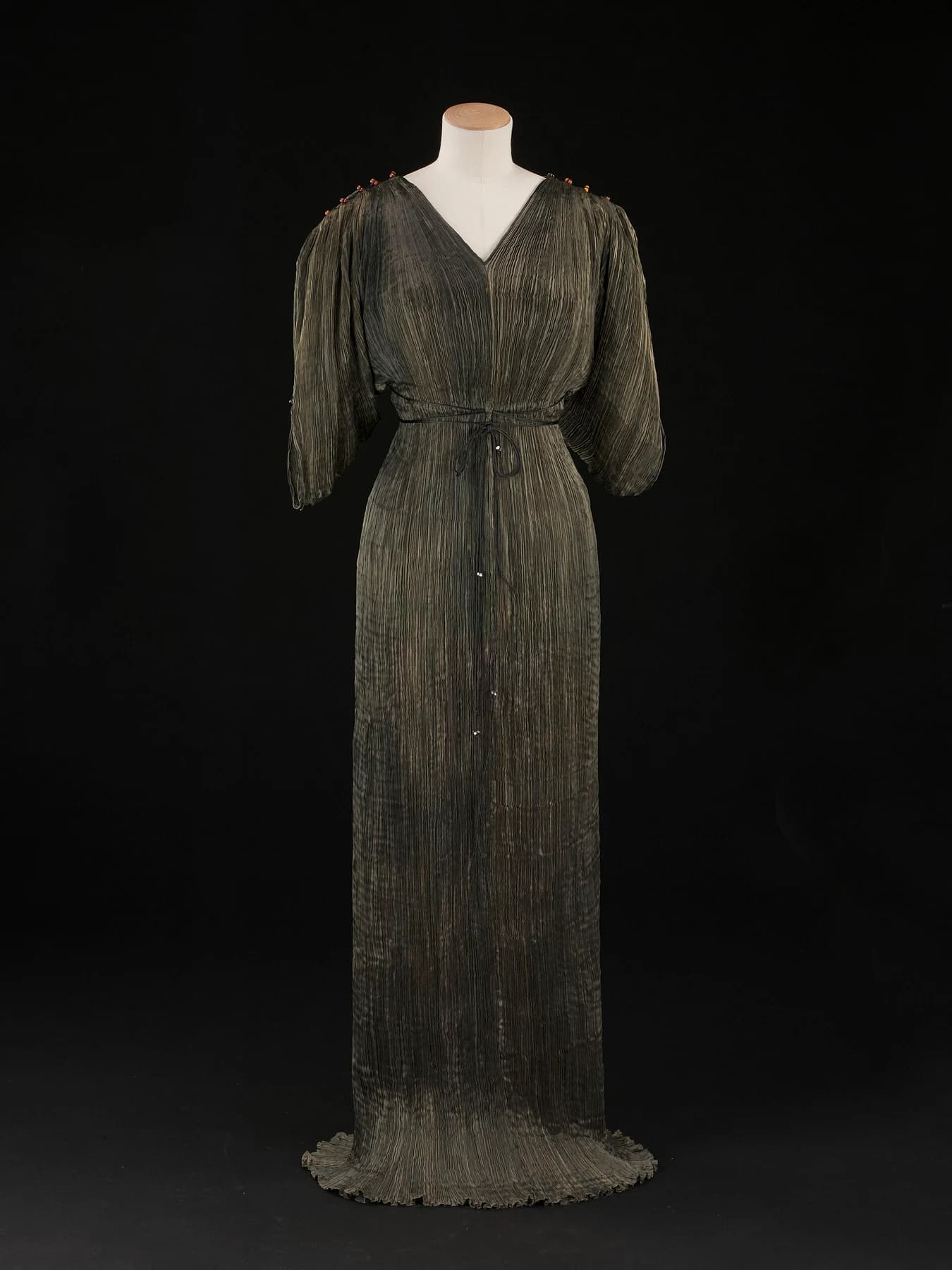
Seen at a distance, a Delphos can look almost impossibly simple: a narrow fall of silk. Up close, the apparent simplicity dissolves into fine pleats, cords and carefully placed glass beads. The construction creates the decoration while allowing the cloth to respond to a body rather than imposing a rigid outline.
The fabric does the shaping
Associated with Mariano Fortuny’s Venetian workshop, the design also requires recognition of Henriette Nigrin, often known as Negrin, whose role is documented in textile scholarship. The photographed Palais Galliera example dates to around 1913. Its bronze-green pleated silk, cord and glass details provide a concrete object to study rather than an interchangeable image of anything described as Fortuny-like.
The enduring value is an inventive relationship between material, gravity and movement. Kyoto Costume Institute explains how the pleats and weighted beads serve structural as well as decorative purposes. The garment’s interest survives changes in fashion because that relationship remains intelligible. It can inform contemporary looking and collecting without making a fragile century-old dress an everyday wardrobe recommendation.
A reference is not a wearable guarantee
Use institutional records to compare construction, labels and documented provenance. If considering an original, seek a textile specialist’s assessment of silk strength, alterations, staining, lost beads and the condition of the pleats. Storage and handling are part of ownership. A compelling archive object can deepen appreciation of clothes one actually wears, even when acquiring the historical example would be impractical or unwise.
Source and context.
Kyoto Costume Institute: Delphos construction and its relationship to the body ↗
Palais Galliera: the photographed Delphos, around 1913, inventory 1969.91.26 ↗
National Gallery of Victoria: Henriette’s role in the Delphos design ↗
The photograph shows a museum-held historical garment, not a current retail dress or an example offered for sale. Attribution, conservation and authentication require specialist evidence.
Source checked 21 October 2026. WHV interpretation is distinct from the source’s account.
Explore Fashion Archives & Textile InventionFOLLOW YOUR CURIOSITY
Where this leads.
Different subjects. A reason to connect them.

Continue the idea
The watch that keeps another kind of time.
A musical wristwatch offers an unexpected parallel in which function is more interesting than decorative status.
Watches & Useful Complications
Read the story
Across the WHV world
The material you recognise too late.
Public sculpture asks a related question about how material and construction can remain visible inside a finished image.
Public Art & Material Reconsideration
Read the story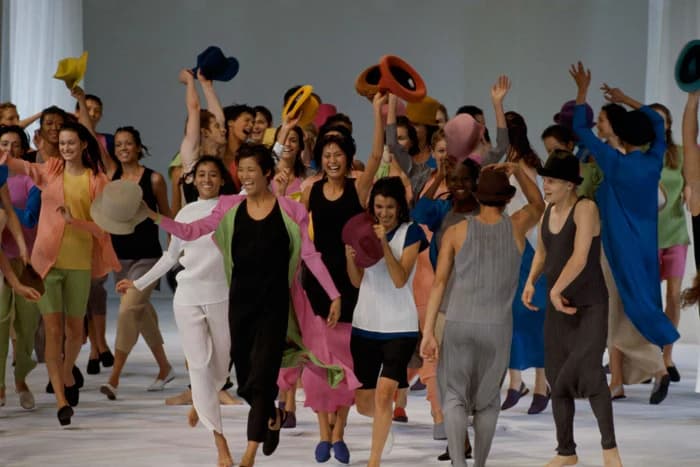
An unexpected connection
Pleats that give the body room.
Compare historical silk pleating with a contemporary clothing system, without assuming the techniques are interchangeable.
Fashion & Textile Innovation
Read the story