DISCOVERY / Accessible Motoring & Historical Engineering
The design brief that became a car.
The Citroën 2CV made comfort and simple transport the point. Its enduring appeal begins with the problem it was designed to solve.
Published 7 October 2026 · WHV · Public-source editorial note
The 2CV can look like a cheerful antidote to oversized modern cars. That reading is too easy if it stops at the silhouette. Citroën began with a more demanding brief: a small, affordable vehicle for people who needed comfortable, useful transport. Its character came from solving that problem with unusual consistency.
Four wheels under an umbrella
Citroën traces the TPV project to 1936 and the eventual public unveiling to 1948. Its historical account highlights independent suspension, a four-speed gearbox and a folding canvas roof. The familiar phrase about four wheels under an umbrella captures the priority, but the engineering gives it substance. Comfort on imperfect roads and economical use mattered more than an image of speed or prestige.
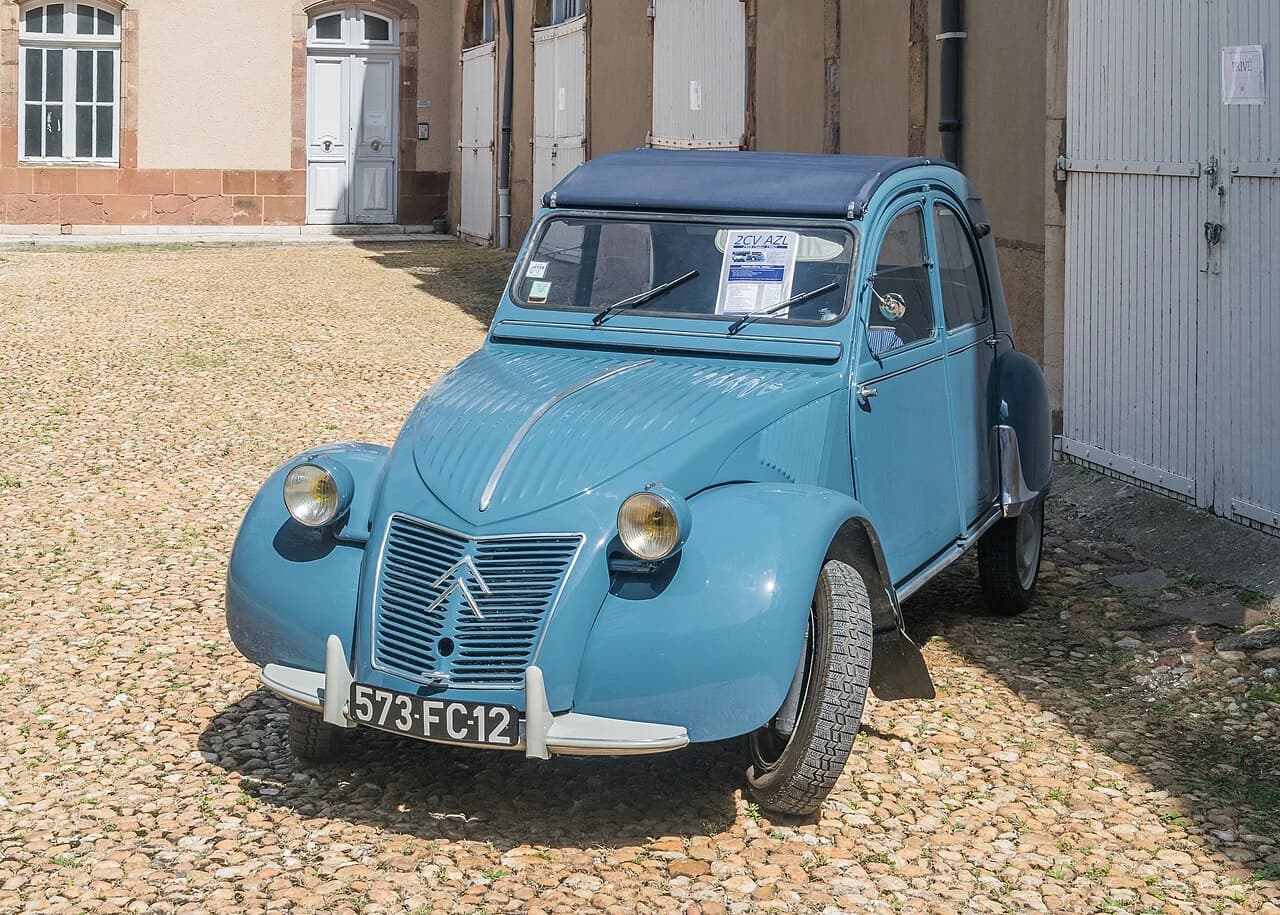
A car that made sense to its first buyers is not automatically easy to own now. Rust, previous repairs, mechanical condition, parts, documentation and local road requirements vary sharply among surviving examples. The blue AZ-family example in the photograph is one car, not proof that every 2CV has the same specification or originality. Nostalgia can hide the work required to keep a historic vehicle safe.
A usable old car is an individual car
If the idea attracts you, ride in a well-kept example before considering a purchase. Ask a marque specialist to inspect the actual vehicle, especially the structure and history of repairs, and to estimate realistic local maintenance. The strongest lesson of the 2CV is not that old cars always hold their price. It is that a focused brief can produce an object people still want to understand decades later.
Source and context.
Citroën: centenary history of the 2CV ↗
Citroën: the model in its company history ↗
Citroën documents the historical concept, not the condition or current running costs of the photographed car. WHV has not inspected, driven or valued a 2CV. Roadworthiness, parts and financial outcomes require model-specific and local evidence.
Source checked 7 October 2026. WHV interpretation is distinct from the source’s account.
Explore Accessible Motoring & Historical EngineeringFOLLOW YOUR CURIOSITY
Where this leads.
Different subjects. A reason to connect them.

Continue the idea
The boat that can choose its depth.
A car and a sailboat become more revealing when the intended journey comes before the silhouette.
Sailing & Mission-fit Design
Read the story
Across the WHV world
The seal between mornings.
A modest everyday object also turns a focused practical brief into a recognisable form.
Everyday Objects & Replaceable Parts
Read the story
An unexpected connection
The machine that lowered the threshold.
Compare another historic response to making personal transport easier to live with.
Everyday Mobility & Useful Engineering
Read the story