DISCOVERY / Urban Reuse & Public Water Landscapes
The shopping mall that became a lagoon.
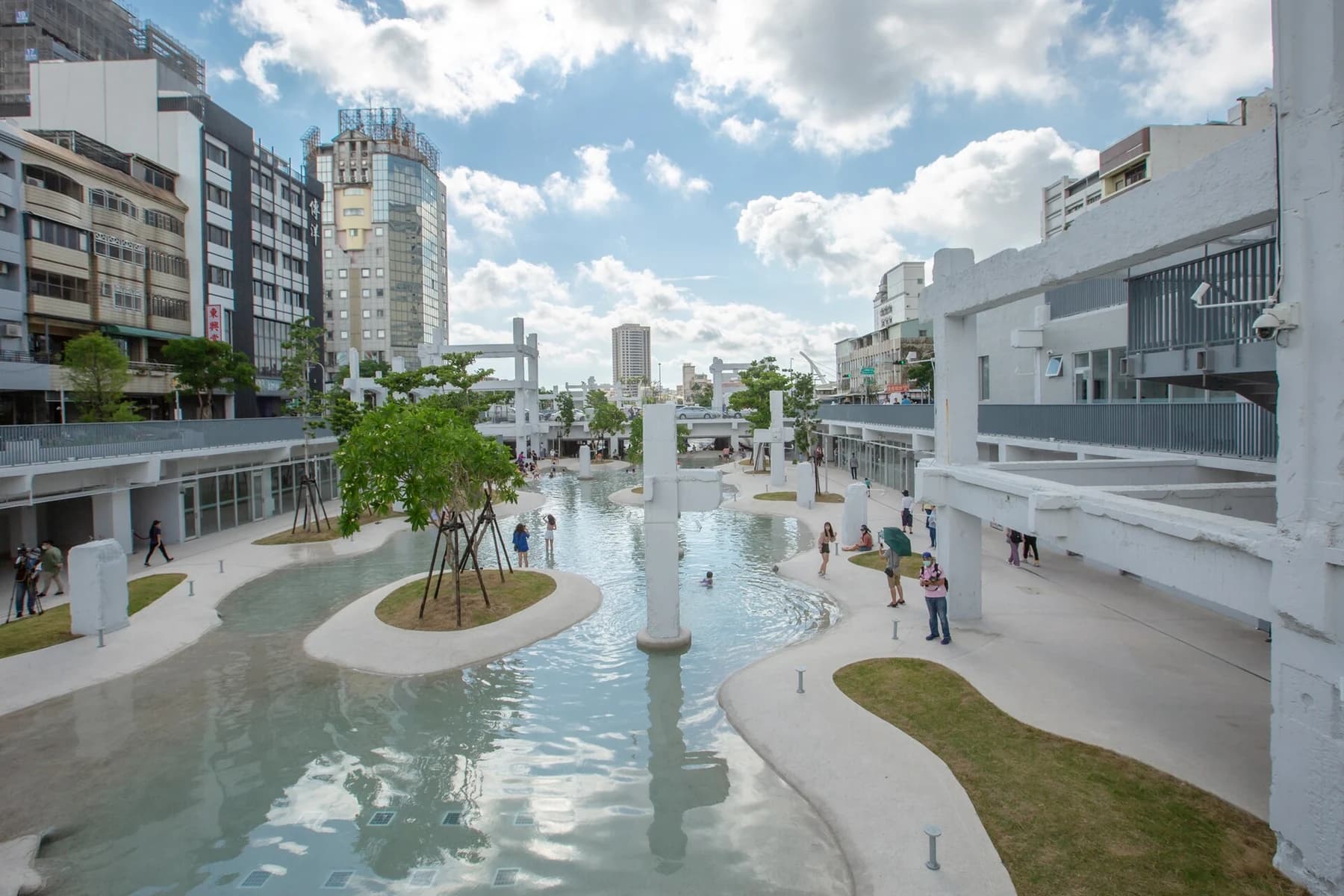
At Tainan Spring, the remains of a shopping mall help frame a sunken public landscape. The useful inheritance is not another shop, but another way for the city to occupy the site.
Published 21 October 2026 · WHV · Public-source editorial note
A shopping mall usually asks a visitor to enter and buy something. Tainan Spring asks what happens when the commercial building has lost that purpose. In the Taiwanese city, MVRDV transformed the former China Town Mall site into a sunken public landscape where water, planting and fragments of structure take the place of shop windows.
The basement becomes the public room
Completed in 2020, the project uses the mall’s underground parking level as a plaza. Portions of the concrete frame remain visible, while an exposed lower basement beneath glass gives another glimpse of the previous building. The site is neither an untouched ruin nor a completely cleared square pretending that nothing stood there before.
The architect describes water levels responding to seasonal conditions, local planting and spaces for gathering or performance. These are design intentions and physical arrangements, not a WHV measurement of cooling, public benefit or environmental savings. Their interest is more immediate: a failed commercial form can leave material and spatial opportunities for a different kind of urban life.
Read the traces rather than a clean slate
Look at the arcade, the remaining columns and the changes in level before treating the pool as a photograph alone. Check local notices for access and water conditions rather than assuming a historical picture promises a filled basin every day. What holds value here is an adaptable idea of inheritance. A city can retain an intelligible trace of an old decision while allowing its residents to make something else of the place.
Source and context.
MVRDV: Tainan Spring transformation and retained structure ↗
Tainan City Government: the public landscape’s opening in 2020 ↗
The photograph records Tainan Spring in August 2020. It does not establish present water conditions or unrestricted bathing. No independent lifecycle, cooling-performance or property-value assessment is offered.
Source checked 21 October 2026. WHV interpretation is distinct from the source’s account.
Explore Urban Reuse & Public Water LandscapesFOLLOW YOUR CURIOSITY
Where this leads.
Different subjects. A reason to connect them.
Continue the idea
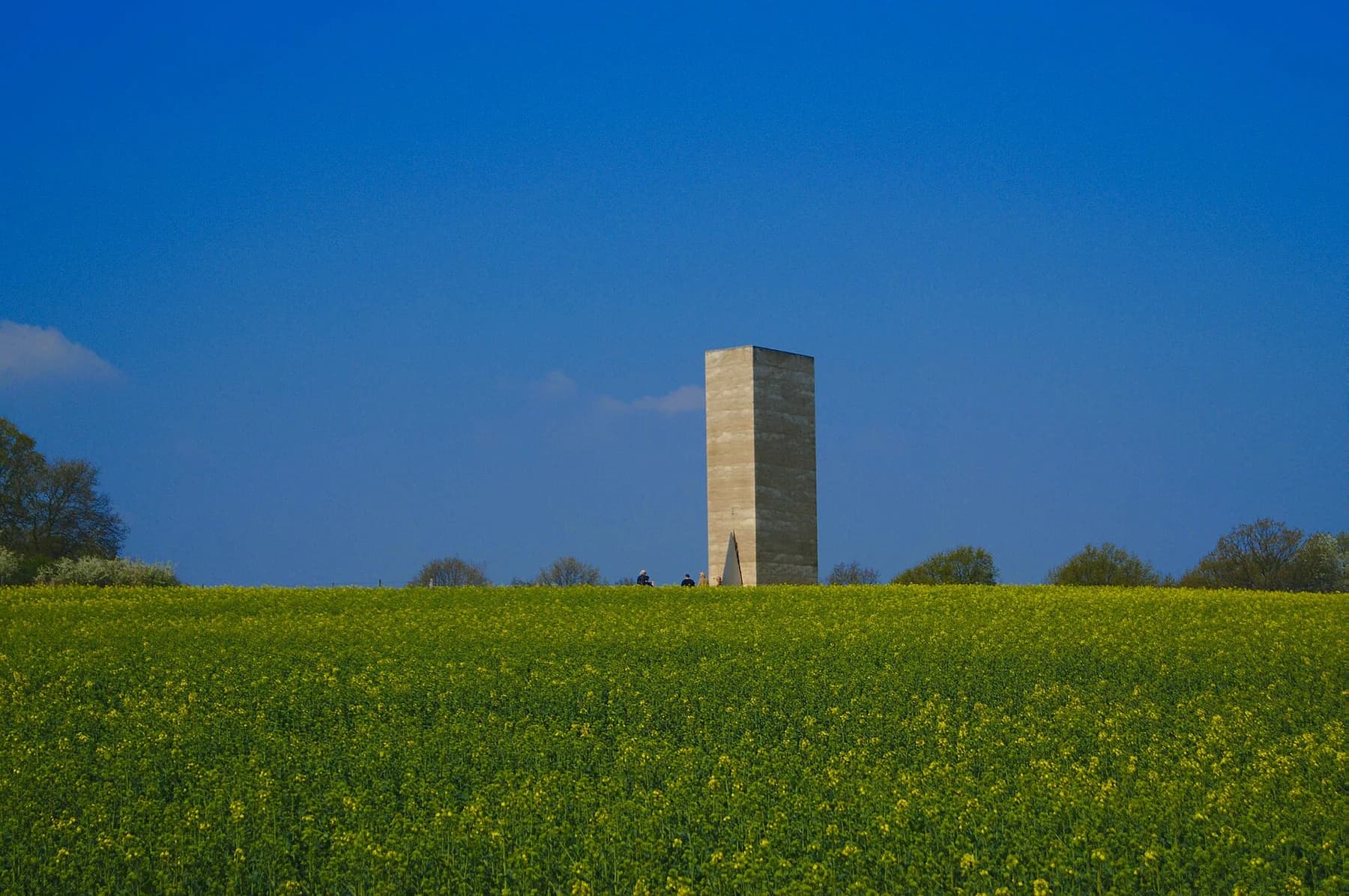
A chapel that leaves room for the sky.
A small chapel provides a contrasting way for an open sky and a particular landscape to become part of a built place.
Sacred Architecture & Material Attention
Read the story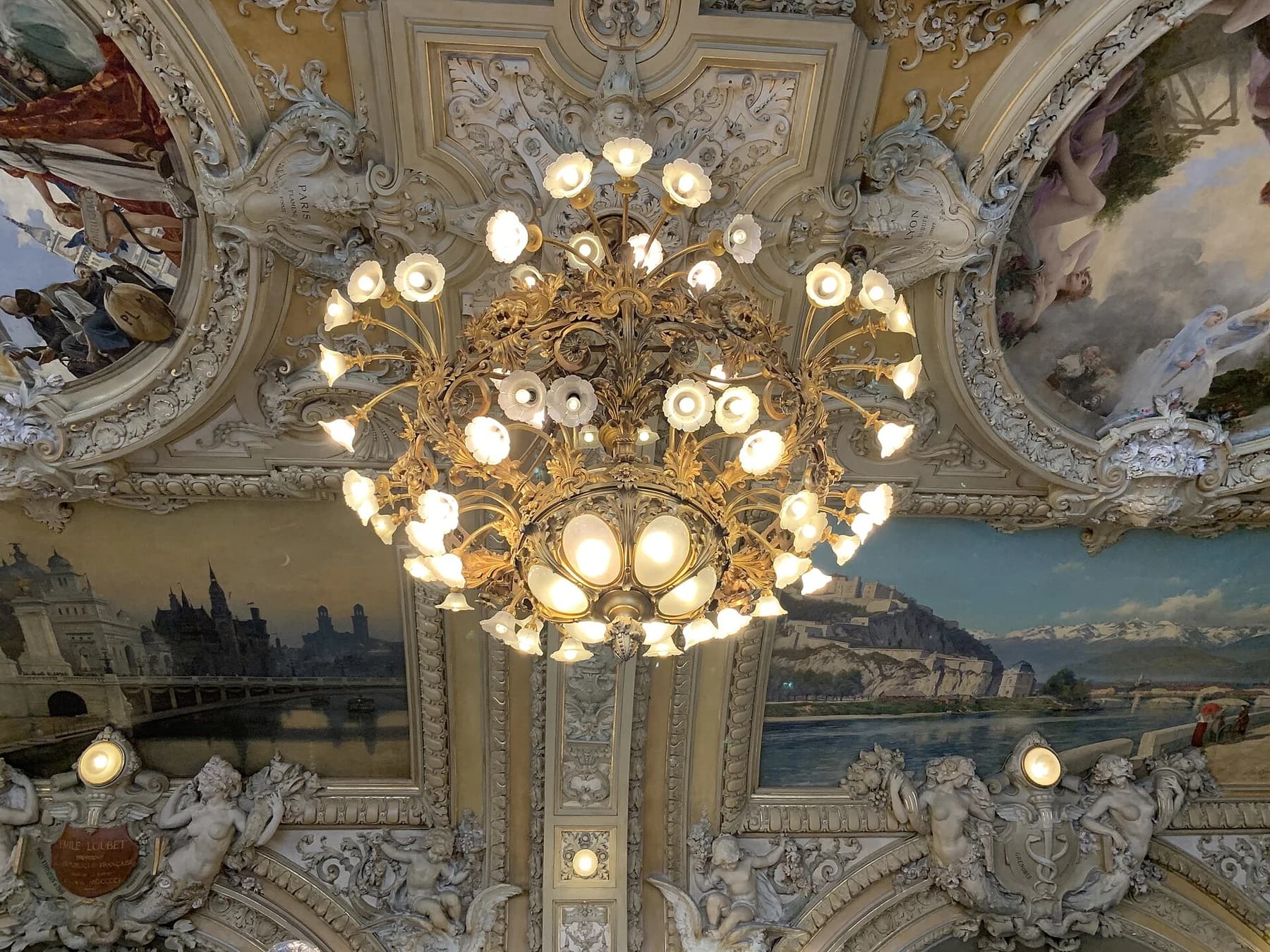
Across the WHV world
The station still sets a table.
A station restaurant shows another relationship between inherited fabric, continuing use and the people who occupy a space.
Railway Dining & Living Interiors
Read the story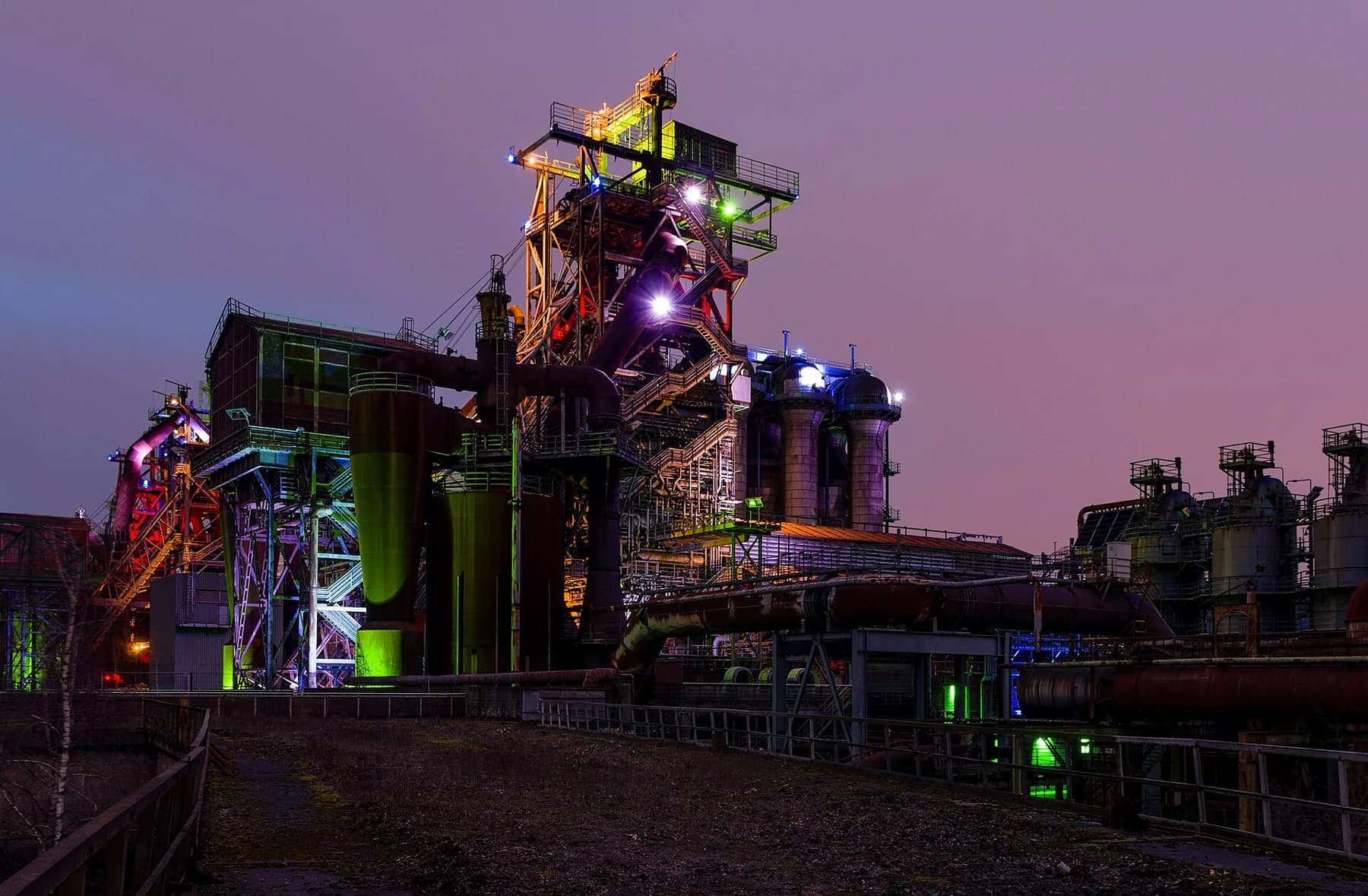
An unexpected connection
The ironworks that became a park.
An industrial park offers a different scale of reuse in which an earlier structure remains a legible part of public life.
Industrial Landscapes & Public Reuse
Read the story