DISCOVERY / Contemporary Ceramic Sculpture
Ranti Bam’s Ifa, the vessel that remembers an embrace.
Ifa white clay rises almost to human height. Its folds make the relationship between a body and a vessel unusually tangible.
 Image: Ranti Bam / Norr Cohan
Published 3 November 2026 · WHV
A vessel usually holds something. In Ranti Bam’s work, it can also suggest the body that held it. Ifa white clay has an upright, almost human presence, with folds and changes of pressure that interrupt the expectation of a smooth ceramic container.
Read the scale before the photograph
The gallery records this particular work as stoneware, dated 2026, measuring 148 by 50 by 53 centimetres. Those dimensions matter. The photograph can make it look like a small object for a shelf, but the actual work asks for a different relationship with the room and with the person standing beside it.
Bam’s practice brings the body into the shaping of clay. The resulting forms carry a sense of contact rather than industrial regularity. That is the reason to spend time with the work: its surface and silhouette make an action feel present after the clay has been fired.
A sculpture needs a place
A serious enquiry should begin with the exact work record and current availability, then move to condition, installation and transport. Ask how the base should be supported and whether any areas need special protection. Compare the sculpture in person if possible. A photograph can introduce the work, but its scale, weight and presence are central to understanding why it might belong in a collection.
Evidence & sources.
Scope of this reading
Date, medium and dimensions are gallery records. WHV has not inspected or authenticated the work independently, and an enquiry button is not confirmation of availability.
Sources checked 3 November 2026.
FOLLOW YOUR CURIOSITY
Where this leads.
Continue the idea
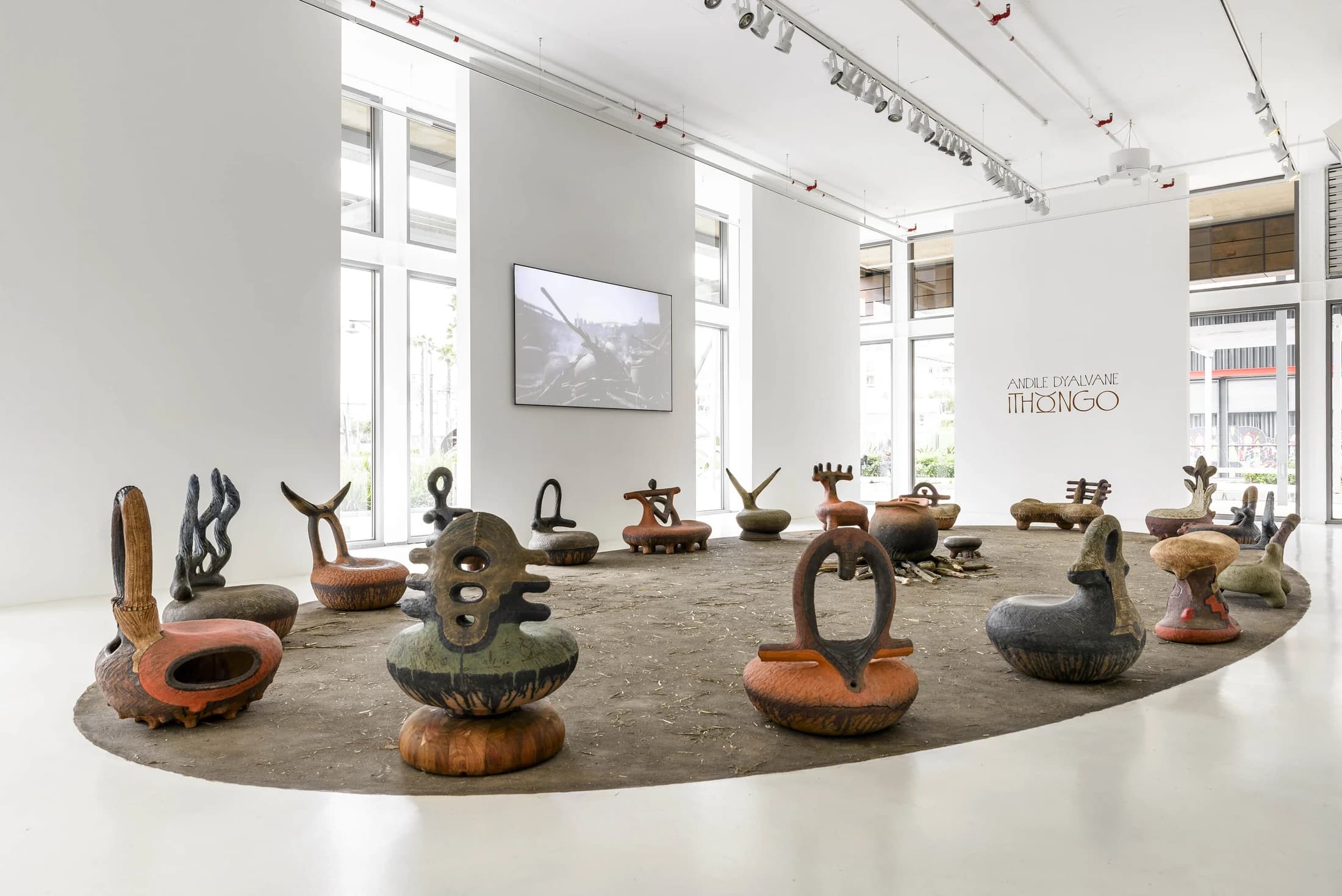
Andile Dyalvane’s iThongo, a gathering made in clay.
Compare two ceramic practices that connect sculptural form with bodily presence.
Read the story Image: Diana Scherer
Across the WHV world
Diana Scherer, the textile grown underground.
An unusual material method can be central to understanding the finished artwork.
Read the story