DISCOVERY / Florentine Hardstone Inlay & Living Workshops
The colour is already in the stone.
In commesso fiorentino, a vein in a stone can become fur, a petal or a distant hill. The surprising art is not painting on minerals, but finding the picture within them and fitting its pieces together.
Published 21 October 2026 · WHV · Public-source editorial note
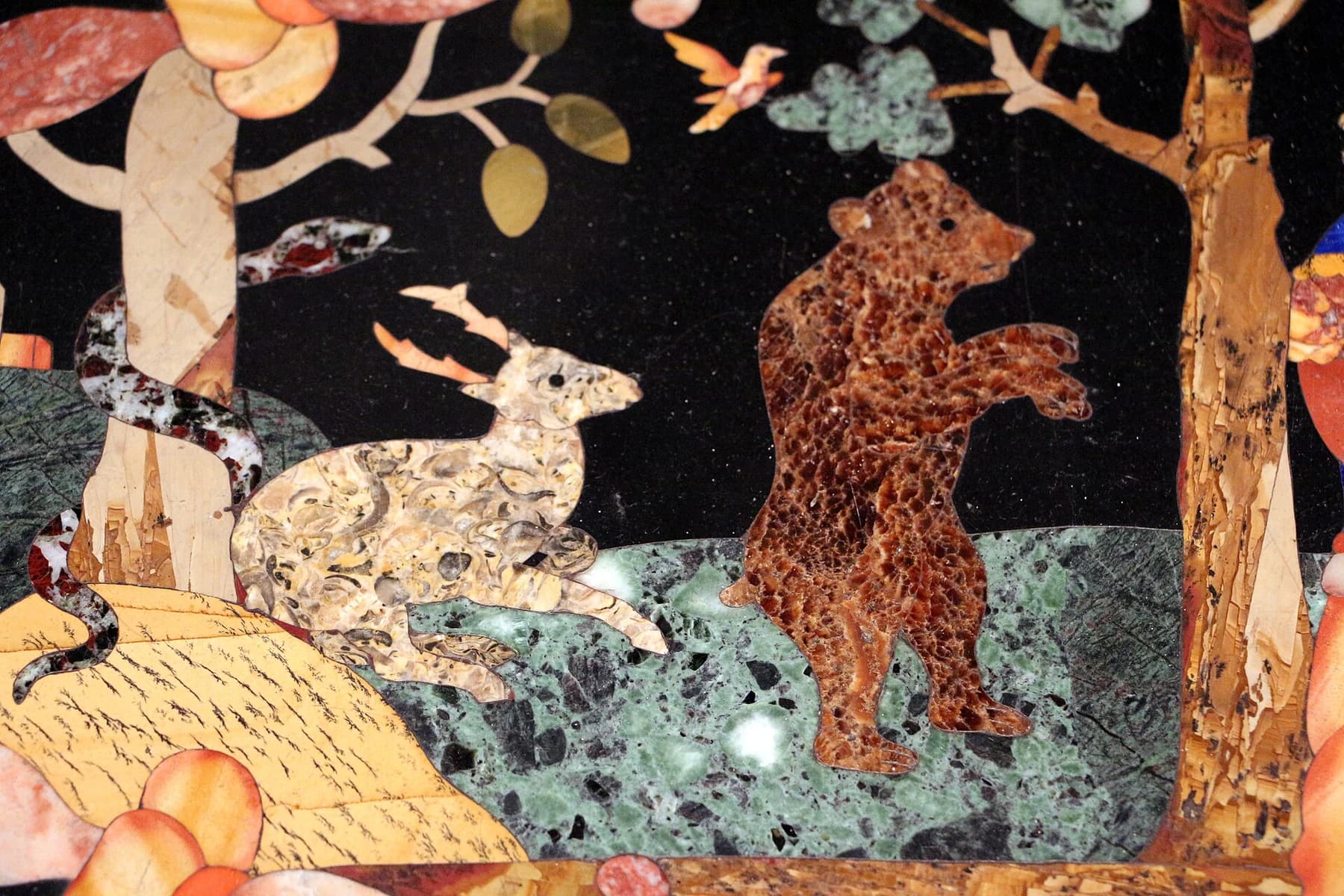
Look closely at the animal in a Florentine hardstone picture. What appears to be a painted marking may be a natural variation in the material itself. Commesso fiorentino asks a maker to find useful colour and movement inside stones, then turn those discoveries into a coherent image.
A palette you have to find
The Scarpelli workshop in Florence describes selecting stones for their shades and veins before attaching small paper patterns to the chosen areas. Cutting, fitting and joining make those separate pieces read together. The palette includes local materials and imported stones. The art lies in observation and placement as much as in the nominal rarity of a mineral.
Historical examples can make the distinction especially vivid. The photographed animal detail belongs to an older Florentine inlaid tabletop in Venice, not a work by the present Scarpelli family. Florence’s Opificio delle Pietre Dure preserves another route into the tradition through its museum and conservation activity. A continuing workshop gives the same investigation a present-day counterpart.
Follow the skill into a living workshop
Compare a historical detail with a contemporary picture or small object, and ask how the stone was chosen for the part it plays. Visit or contact the workshop to establish current work and access. If considering an acquisition, authorship, construction, condition and repair deserve separate attention. A polished stone picture is not automatically an antique. Its distinctive value can begin in a maker’s ability to notice an image where most of us see only raw material.
Source and context.
Scarpelli Mosaici: selecting stones, cutting and continuing commesso fiorentino ↗
Opificio delle Pietre Dure: museum, historical manufacture and conservation ↗
Scarpelli Mosaici: the technique and contemporary forms ↗
The photograph records a historical animal-inlay detail at Ca’ Rezzonico, not a Scarpelli work or an available sale object. Natural stone colour is not a condition report or authentication. Historical and contemporary production must be identified separately.
Source checked 21 October 2026. WHV interpretation is distinct from the source’s account.
Explore Florentine Hardstone Inlay & Living WorkshopsFOLLOW YOUR CURIOSITY
Where this leads.
Different subjects. A reason to connect them.
Continue the idea
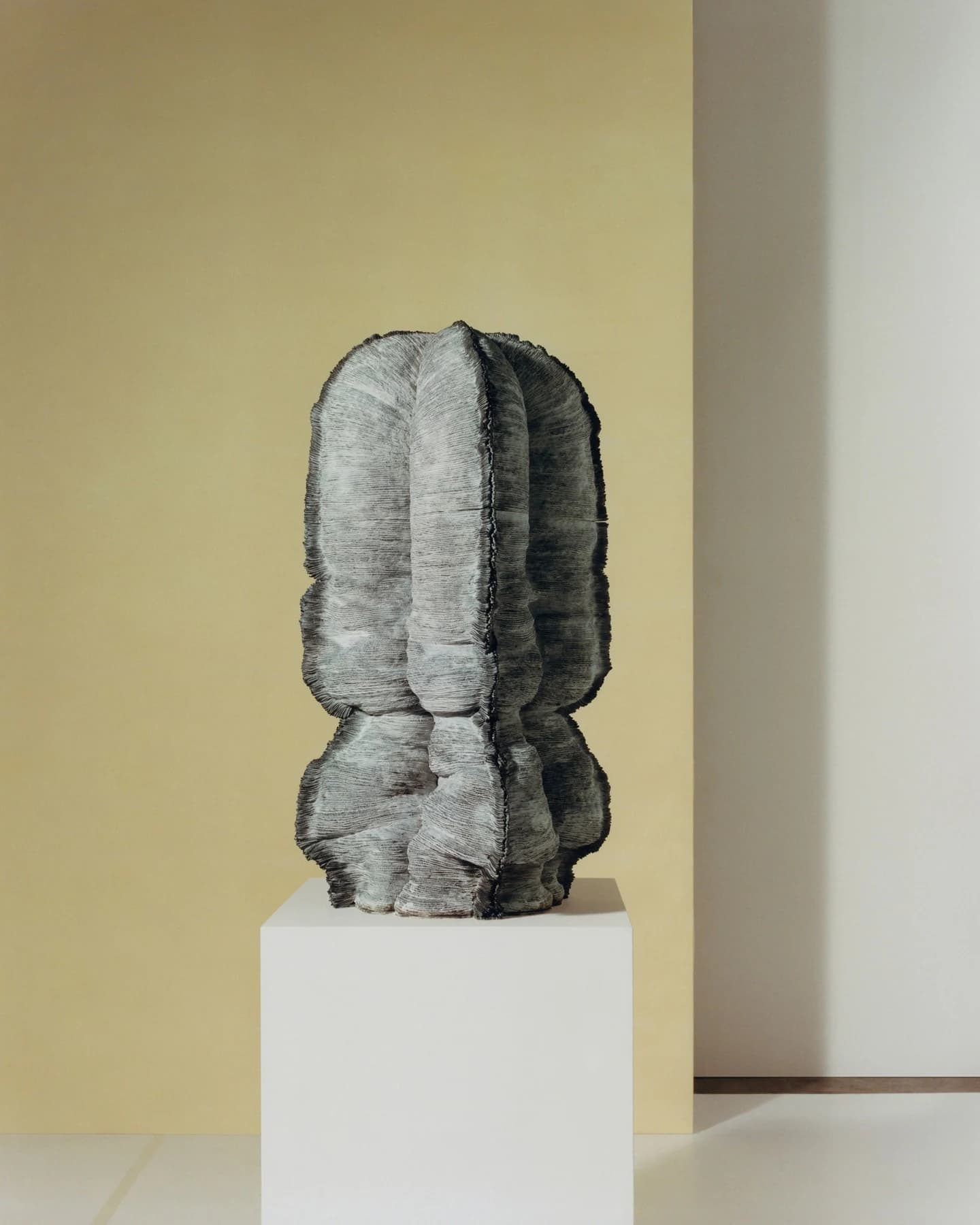
Clay that keeps the pressure visible.
A contemporary sculptor makes a different material’s behaviour integral to the surface and shape of an authored object.
Contemporary Terracotta & Sculptural Process
Read the story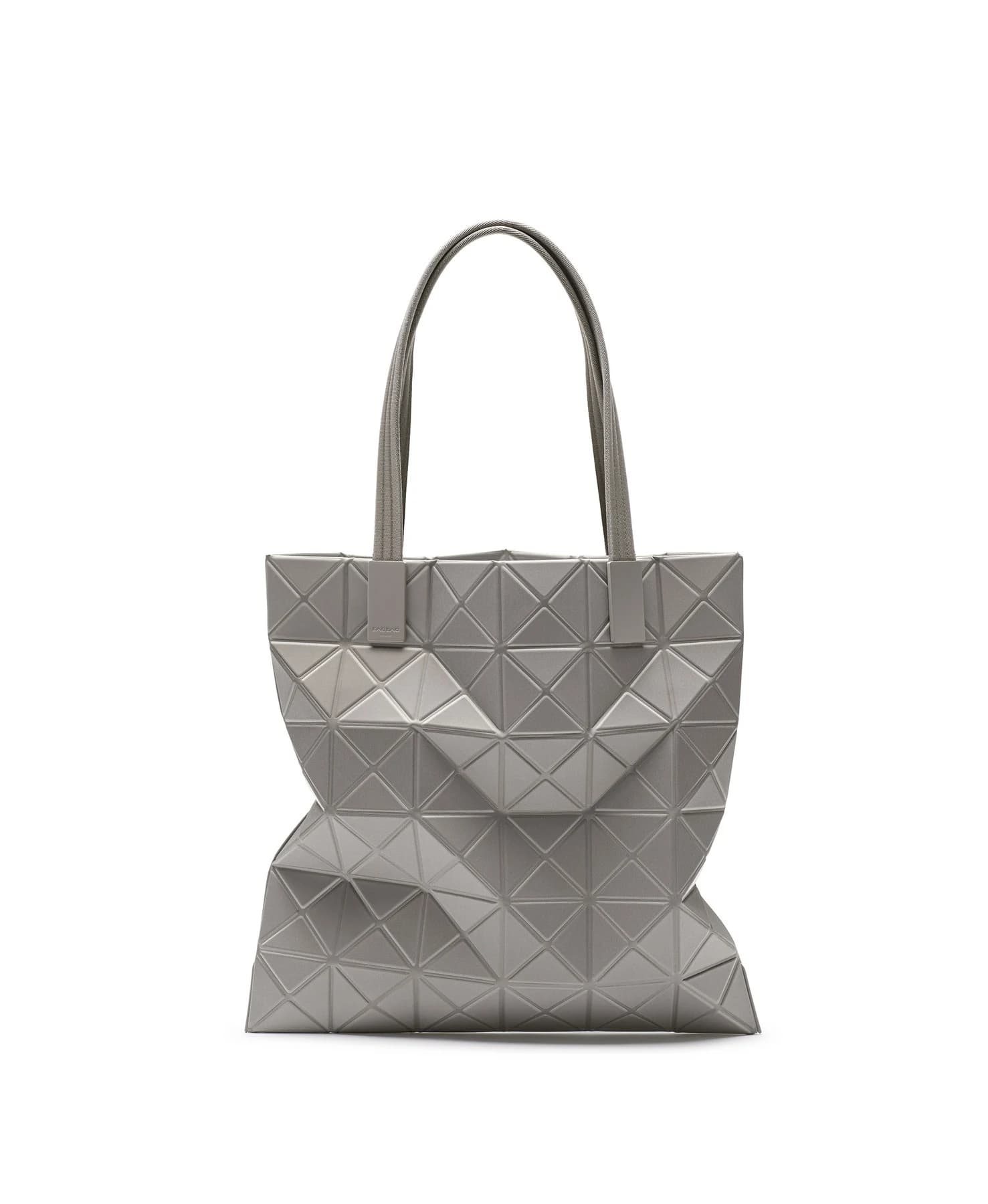
Across the WHV world
A bag that finds its shape.
Change from fitted stone pieces to flexible triangular units and consider another way parts become a coherent surface.
Geometric Textiles & Everyday Carry
Read the story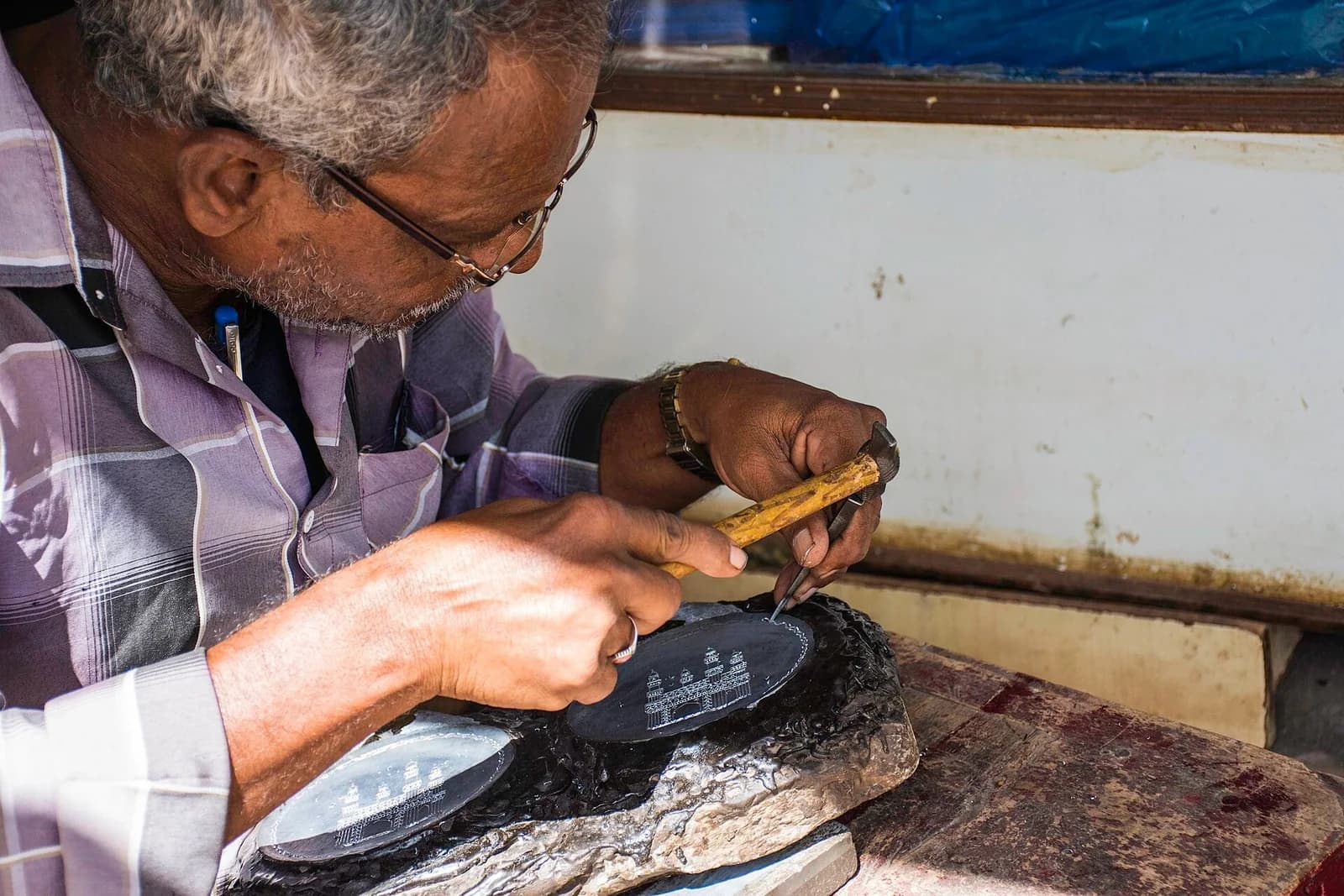
An unexpected connection
The silver is not the whole story.
Another inlay tradition shows why the relationship between the ground, inserted material and finishing matters more than material price.
Metal Inlay & Material Transformation
Read the story