DISCOVERY / Printmaking & Editions
Pacita Abad’s Sweet things are made of these, a print with an edge.
A work made at STPI in 2003 lets shaped paper, printing and cloth carry equal weight.
 Image: Pacita Abad Art Estate
Published 4 November 2026 · WHV
Start at the edge
Start with the yellow circles that push out at the lower right. Then look at the thin strip of white beyond them. There is no rectangular sheet running uninterrupted around the composition. The outline of Pacita Abad’s Sweet things are made of these is itself an irregular shape, as if the colour had decided where the paper could stop.
The estate records the work at fifty by forty inches. That is a useful fact to keep beside the image on a screen. What looks at thumbnail size like a dense pattern occupies more than a metre in each direction. At that scale you can move between a field of small marks and the larger shapes that hold them together.
Read the paper as part of the image
Abad made the work at Singapore Tyler Print Institute in 2003. The estate’s record describes shaped handmade paper and stencilled coloured pulp, alongside lithography, linocut, screenprinting, cloth and foil. Those materials do different jobs. Some colour is in the pulp, some is printed onto the sheet and some arrives with a material of its own.
Pick one colour and trace it across the work. See where it looks absorbed into the sheet, where it stops at a sharp line and where it meets a piece of collage. A reproduction lets you look at the distribution of forms. The reflectivity of foil, the thickness of an edge and the way the surface responds to changing light call for a close view of the object.
Compare an impression, not just a title
The estate catalogues an edition of twelve and records an impression at the Ayala Museum. The work also appeared in the documentation of Common Ground, STPI’s 2025 return to Abad’s Singapore projects. Those records establish where to start identifying it, with each impression’s own exhibition and ownership history to establish separately.
Ask for the edition notation and photographs of the full outline, including the edges and the back if a specialist can show it safely. Ask what supports the sheet and how the collage is held. The shape that gives the work its character is also part of what a frame and a condition report need to account for.
Evidence & sources.
- Pacita Abad estate, Circles in My Mind and exact work record (opens source in a new tab)
- Pacita Abad estate, museum collections (opens source in a new tab)
- Pacita Abad estate, Common Ground at STPI in 2025 (opens source in a new tab)
Scope of this reading
The estate photograph identifies the work. It cannot establish the edition number, condition or availability of an impression offered elsewhere.
Sources checked 4 November 2026.
FOLLOW YOUR CURIOSITY
Where this leads.
Continue the idea
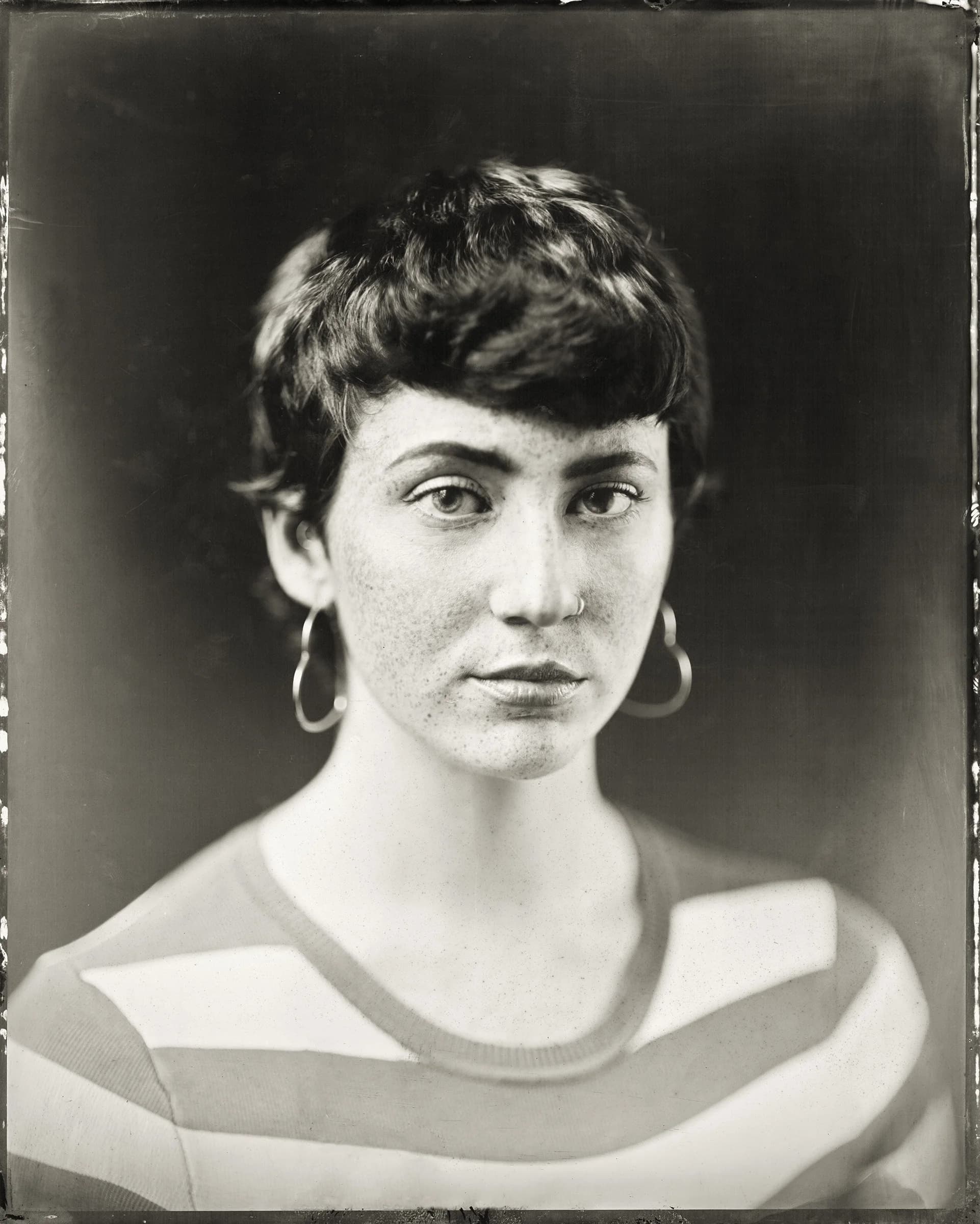
Penumbra, a portrait that becomes an object.
Compare a photographic edition whose material presence also changes how it can be read.
Read the story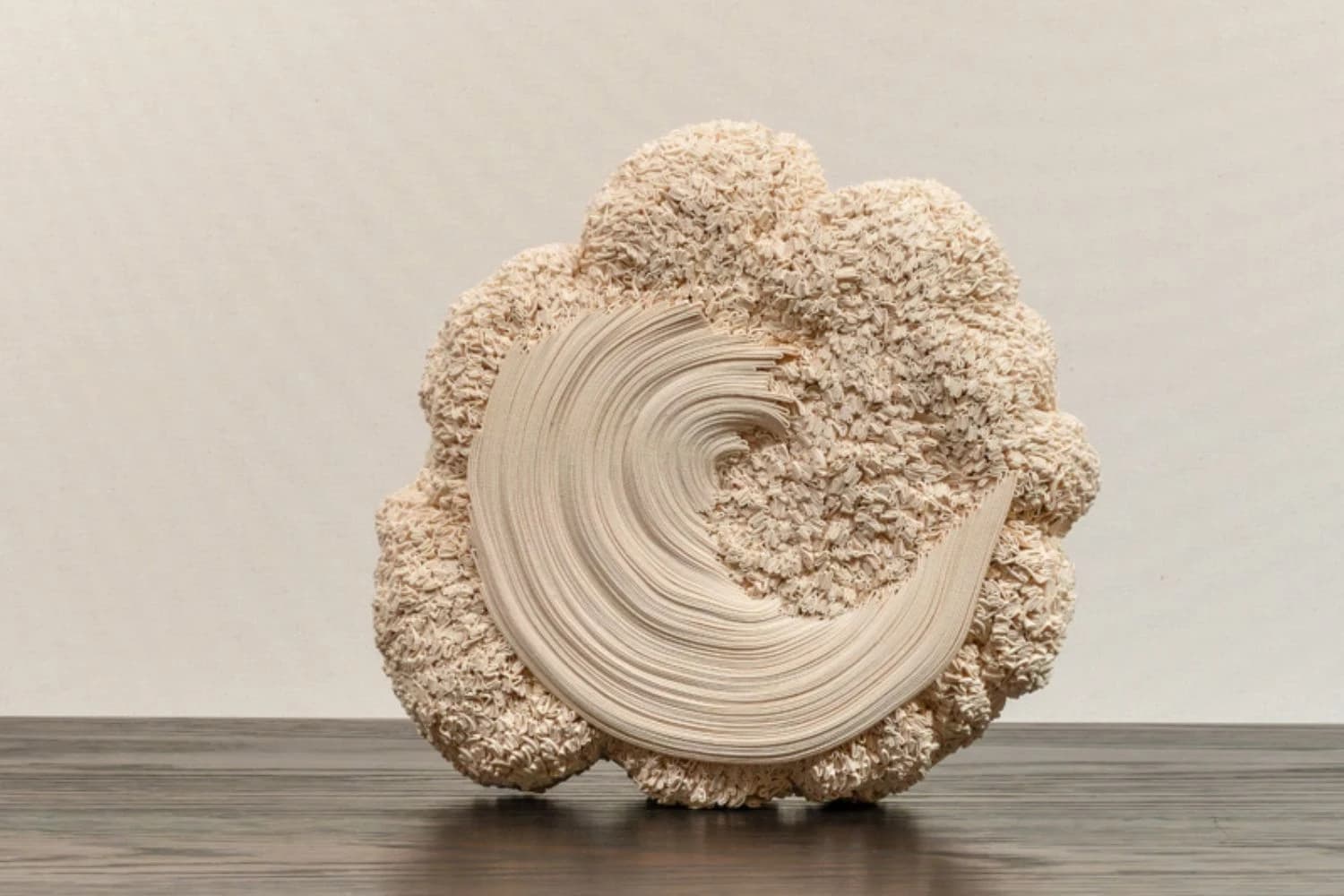
Across the WHV world
Simone Pheulpin’s cotton geology.
Follow the use of cloth from an element of collage to the principal material of a sculpture.
Read the story