DISCOVERY / Textile Sculpture
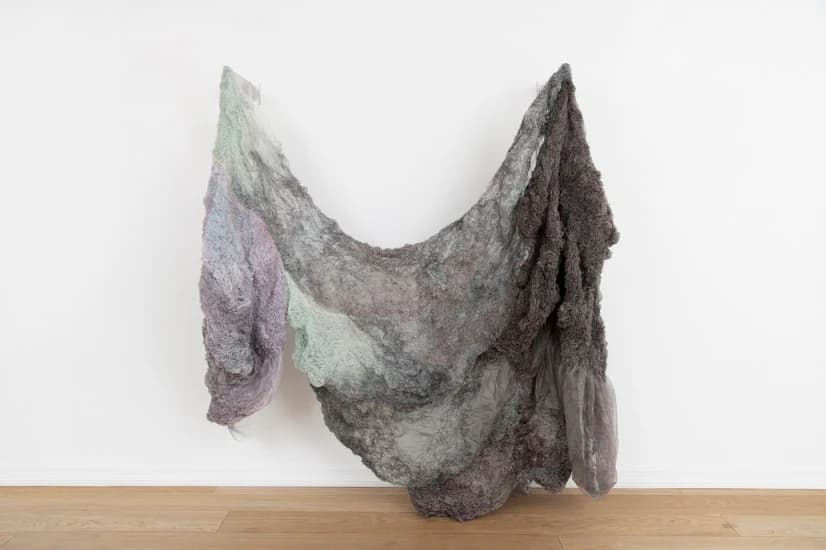
Hanne Friis’s Bow, how fabric takes up space.
Hand-dyed and hand-stitched nylon organza becomes a sculpture whose thickness can be seen as well as felt in the folds.
Published 4 November 2026 · WHV
From across a room, Bow can look almost weighty enough to have been cast. The work record gives a more useful starting point. Hanne Friis made the 2025 sculpture from hand-dyed and hand-stitched nylon organza, with a depth of fifty centimetres.
Look from the outer edges towards the denser parts. The fabric reads differently where it turns, overlaps or allows light to reach the wall. The work rewards moving to one side and looking again. Its form depends on what has been done to the material rather than on the material’s name alone.
Before enquiring about an individual work, confirm the title and measurements with the gallery. Ask about mounting, light exposure and how the work should be packed. Those details affect what it is possible to see and how long the textile can be kept in good condition.
Evidence & sources.
- Oslo Open, Bue / Bow record and credits (opens source in a new tab)
- QB Gallery, Hanne Friis (opens source in a new tab)
Scope of this reading
The Oslo Open record identifies the work and photograph. It does not establish current availability or the condition of an individual object.
Sources checked 4 November 2026.
FOLLOW YOUR CURIOSITY
Where this leads.
Continue the idea
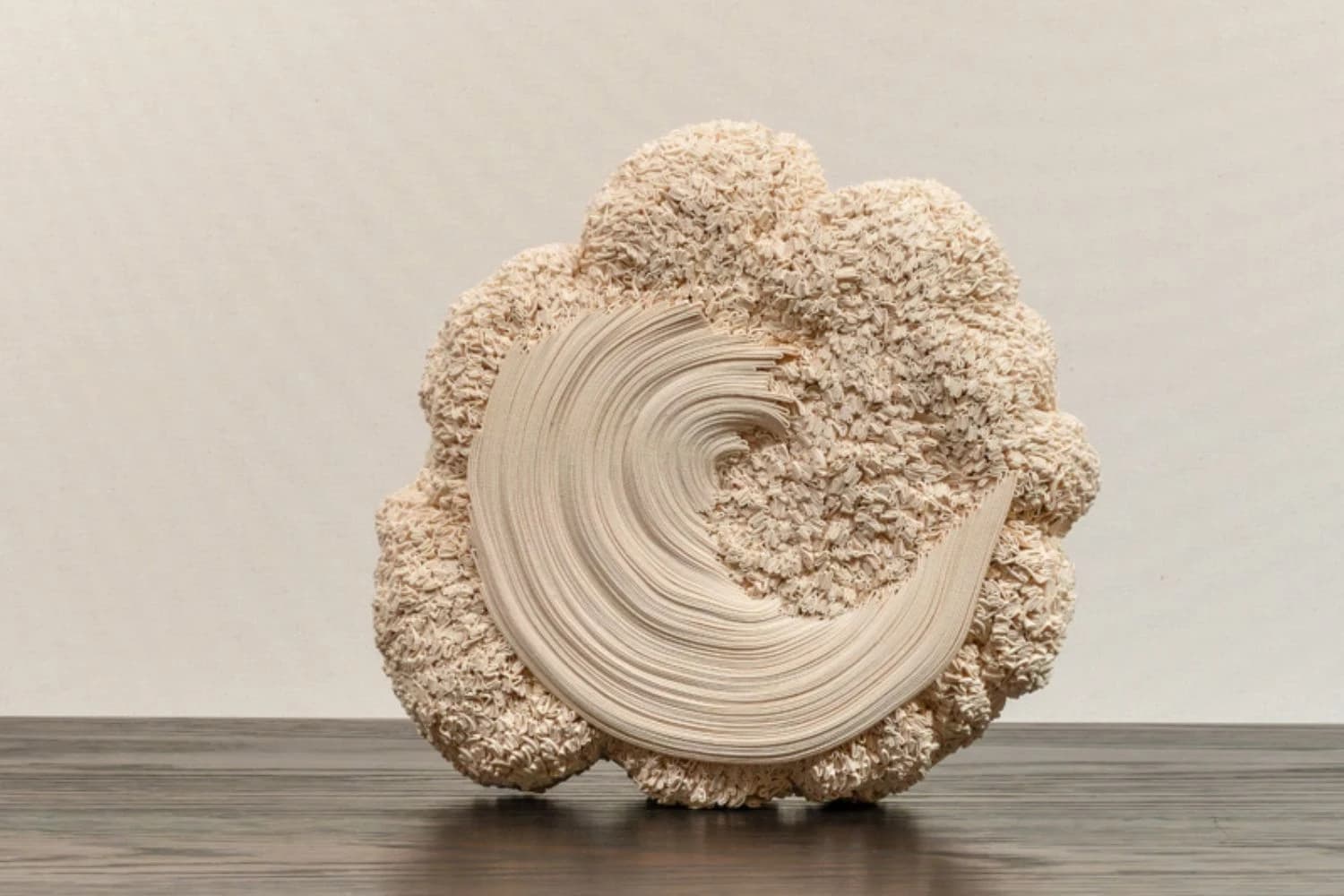
Simone Pheulpin’s cotton geology.
Compare two artists who give familiar textiles unexpected volume.
Read the story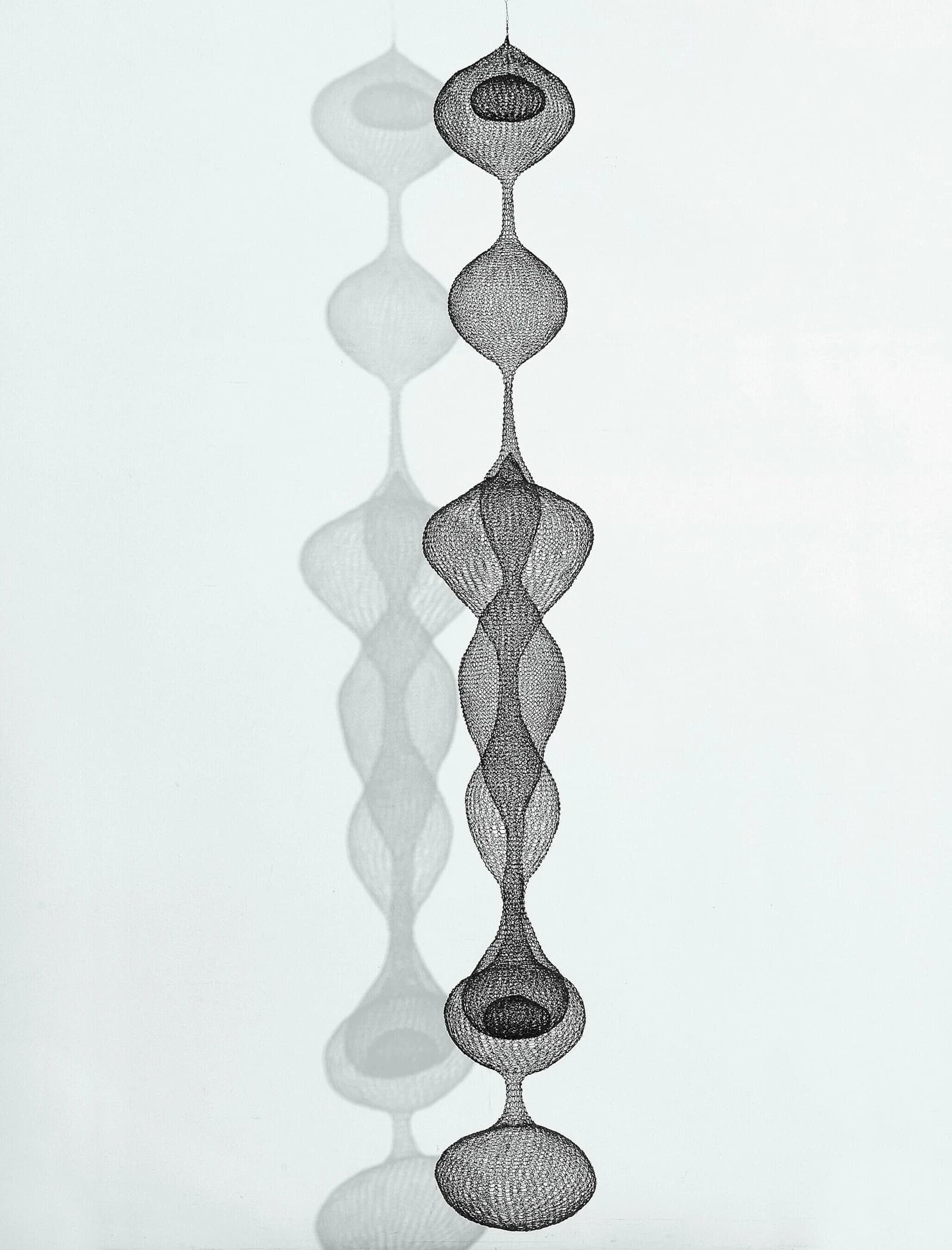
An unexpected connection
Ruth Asawa’s S.272, see the wire and the air.
Follow transparency from folded organza to a looped-wire work.
Read the story