DISCOVERY / Art Glass & Material Intelligence
When the irregularities are the point.
Christopher Dresser’s Clutha glass allows colour, streaks and the character of molten material to become the ornament. A small historical object opens a large design question.
Published 21 October 2026 · WHV · Public-source editorial note
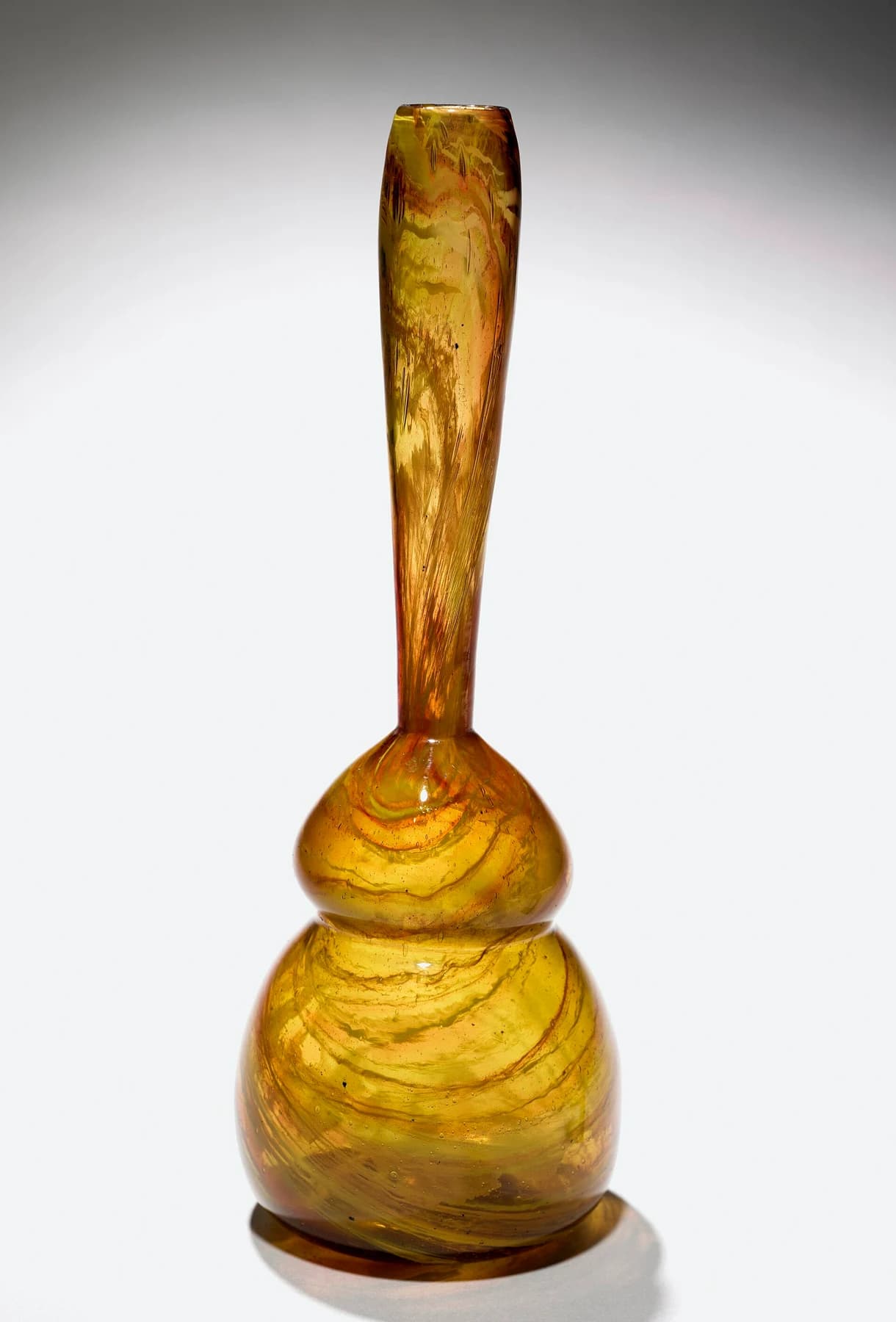
The colour does not sit neatly on the surface of this vase. It seems to move through the glass, gathering and stretching around a long neck and rounded body. Christopher Dresser’s Clutha designs make the material’s fluid character part of what the eye is invited to enjoy.
Decoration can belong to the substance
Cleveland Museum of Art dates the photographed vase to around 1895 and identifies James Couper and Sons as its maker. The Metropolitan Museum’s account of another Clutha vase explains the wider approach: bubbles, coloured streaks and irregularities were intentional features. The range was manufactured in Glasgow and sold through Liberty in London. These were designed objects, not simply attractive accidents.
That distinction remains useful well beyond nineteenth-century glass. We often mistake uniformity for quality and variation for failure. Clutha offers a more demanding reading in which irregularity can be controlled, purposeful and inseparable from the work. It does not follow that every flaw in an old vase is desirable. Damage and an intended material effect are different things.
Learn from documented examples first
Start with the museum records and compare shape, scale and attribution before approaching a dealer or sale. Ask for detailed condition photographs, restoration disclosures and the basis of any Dresser attribution. The Cleveland object is a museum reference, not available stock. The practical reward is learning to see a field more precisely, whether that leads to collecting, visiting a collection or choosing contemporary glass with a better understanding of its making.
Source and context.
Cleveland Museum of Art: Dresser and James Couper vase, circa 1895 ↗
The Metropolitan Museum of Art: Clutha glass and its intentional irregularities ↗
The photographed Cleveland vase is circa 1895, not the separate circa 1890 Met example. Attribution, damage and restoration require object-specific assessment.
Source checked 21 October 2026. WHV interpretation is distinct from the source’s account.
Explore Art Glass & Material IntelligenceFOLLOW YOUR CURIOSITY
Where this leads.
Different subjects. A reason to connect them.
 Image: © Hiroshi Sugimoto / Object © Christian Dior Couture collection, Paris (opens source in a new tab)
Continue the idea
When a dress becomes sculpture.
A photographic reinterpretation of clothing also asks the viewer to notice form and material before reputation.
Photography & The Afterlife of Fashion
Read the story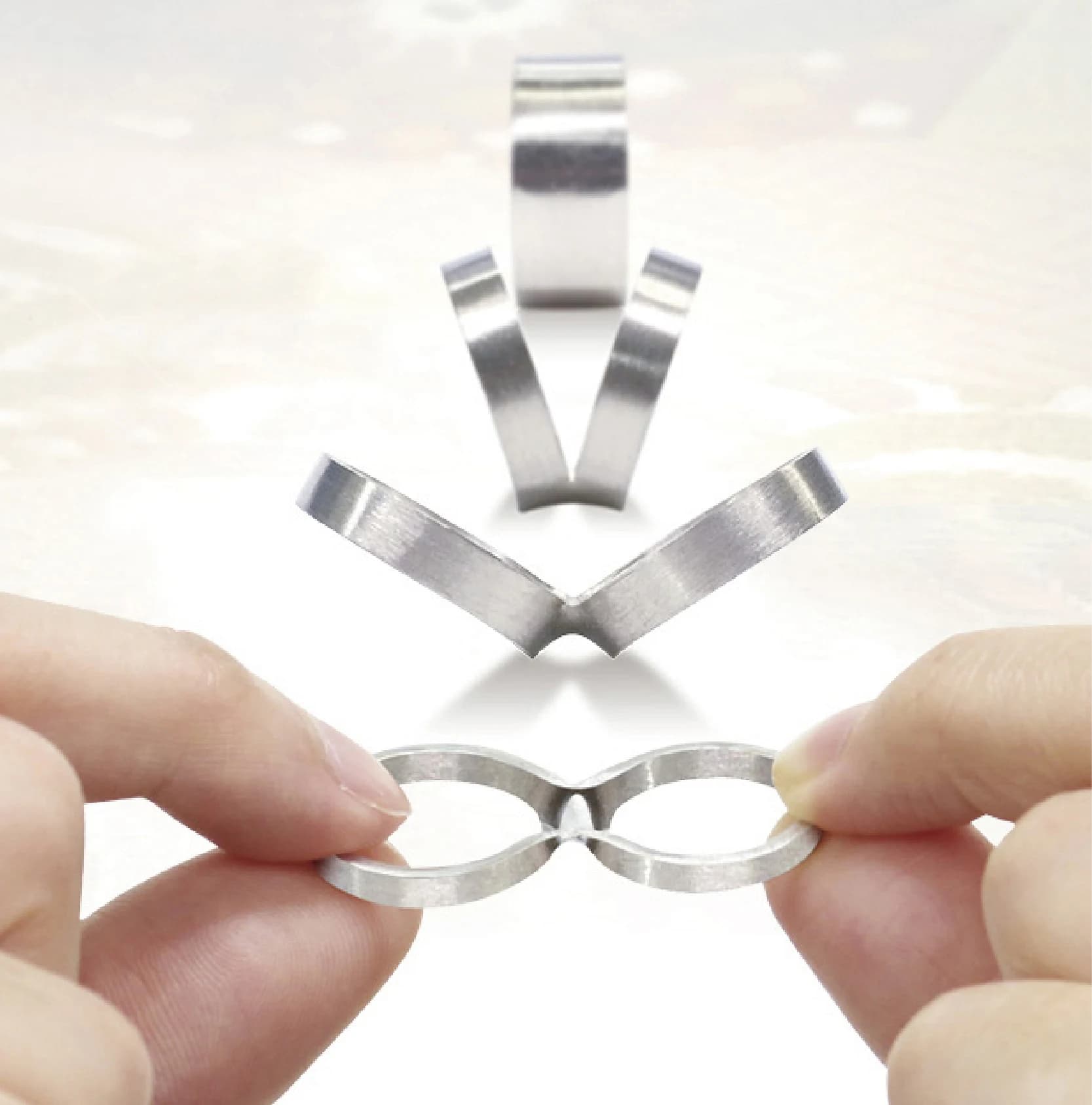
Across the WHV world
Two rings from one beginning.
Layered metals make another pattern whose significance comes from its construction rather than applied decoration.
Jewellery & Material Memory
Read the story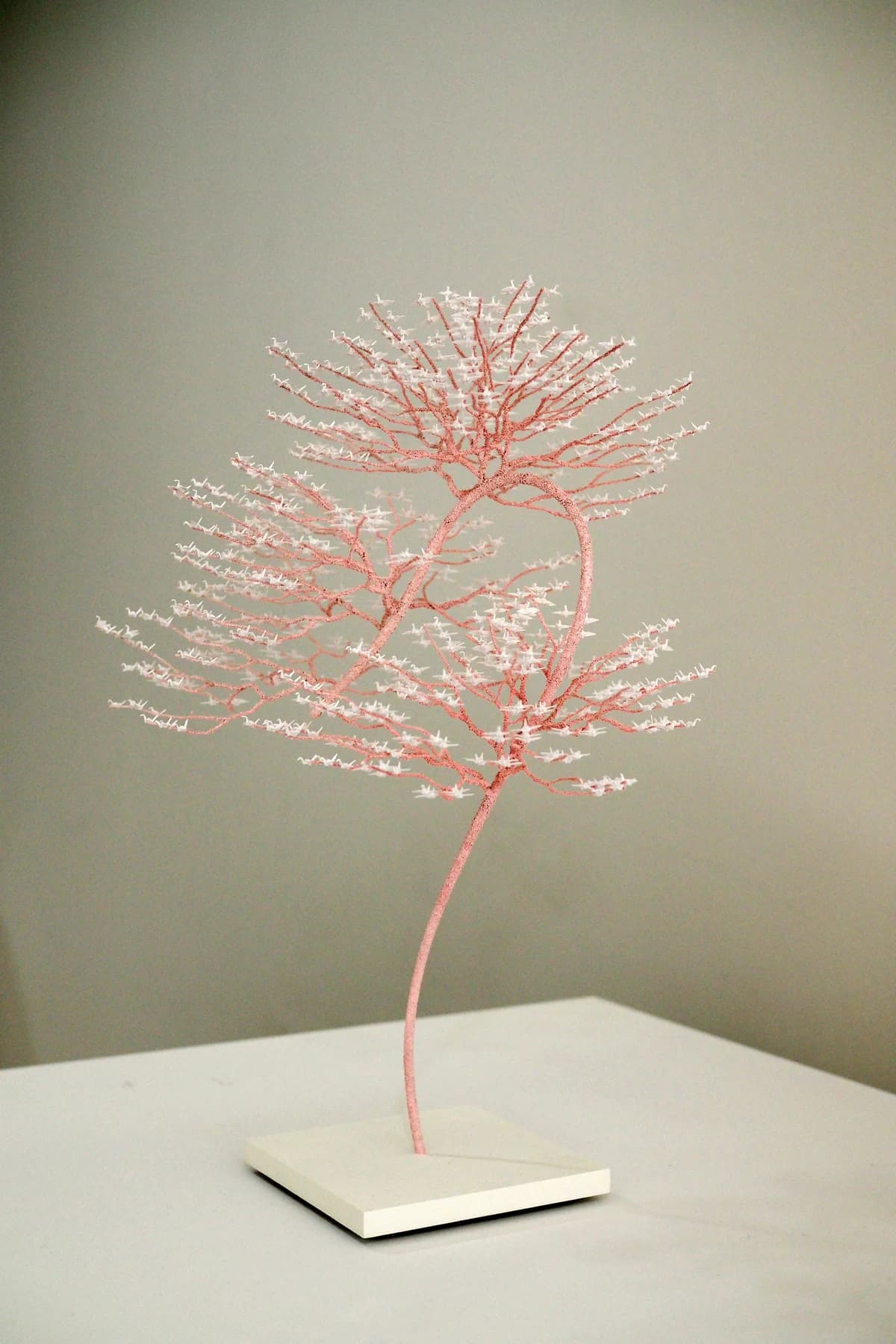
An unexpected connection
A forest, folded by hand.
Tiny folded paper units provide a contemporary contrast to glass, showing how modest material can carry a precise artistic language.
Contemporary Paper Sculpture
Read the story