DISCOVERY / Natural History & Contemporary Art
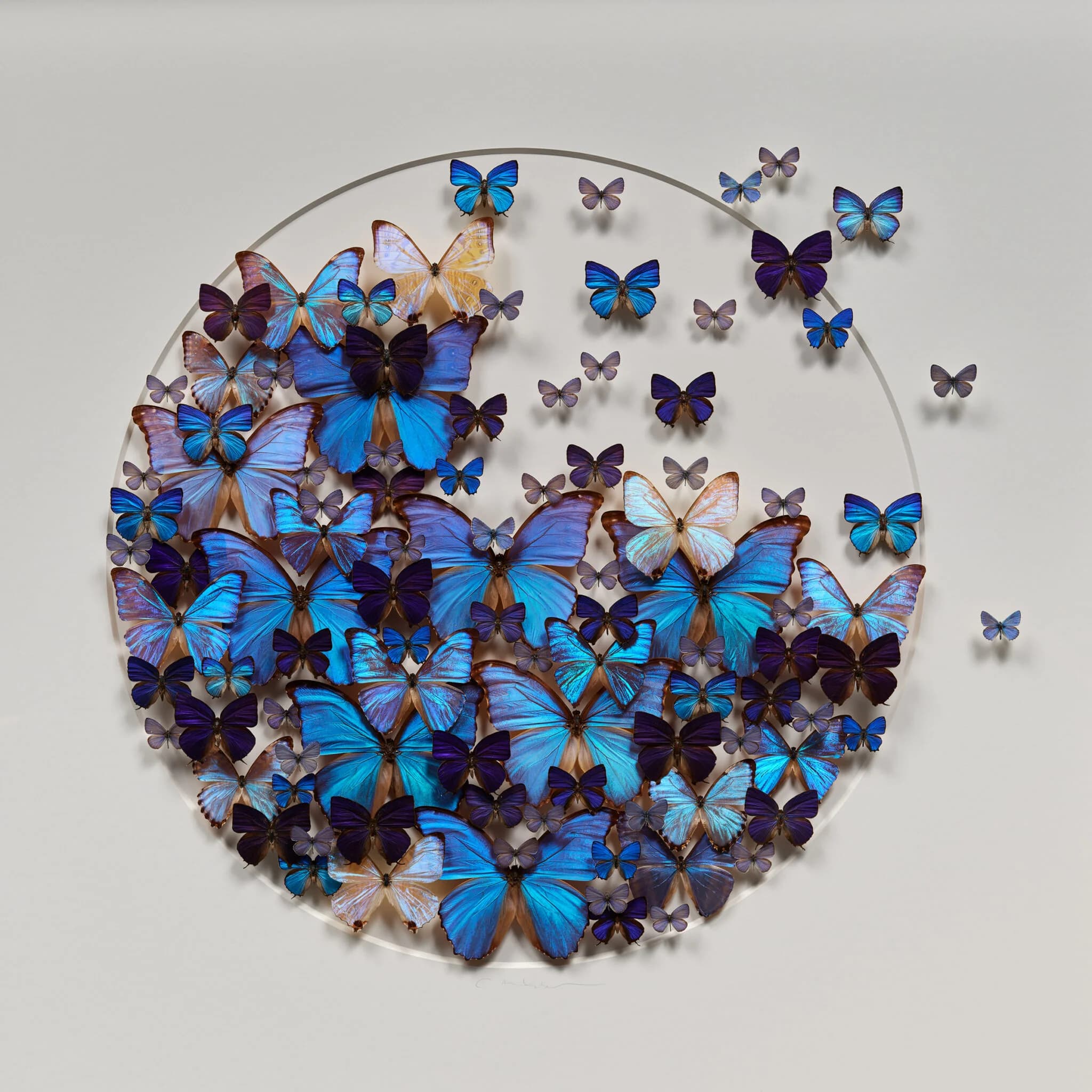
Christopher Marley’s Cerulean Genesis, colour before the label.
A composition of preserved butterflies makes patterns visible at a scale one specimen cannot.
Published 3 November 2026 · WHV
From a distance, Cerulean Genesis gathers itself into a blue field. Up close, that field resolves into individual butterflies, with variations of shape and colour that are easy to miss when looking at one specimen at a time. The composition makes the act of comparison part of the encounter.
The Hudson River Museum records this 2015 work in the Art Bridges collection and presents it in Exquisite Creatures. Marley’s arrangements borrow some of the visual clarity of a natural history display, while making choices about rhythm, density and empty space that belong to an artist.
Look for the point where your eye moves from the group to one animal and back again. The museum setting also makes it possible to ask how the work is documented and cared for. The encounter is a useful way to develop a more attentive eye for both art and natural history.
Evidence & sources.
- Hudson River Museum: Exquisite Creatures (opens source in a new tab)
- Further documentation from christophermarley.com (opens source in a new tab)
Scope of this reading
The depicted work is in the Art Bridges collection. The museum provides an exhibition context for viewing the work.
Sources checked 3 November 2026.
FOLLOW YOUR CURIOSITY
Where this leads.
 Image: DRIFT
Continue the idea
DRIFT’s Fragile Future, the dandelion inside the circuit.
Compare artworks that give preserved natural material a new formal structure.
Read the story Image: Ellerman House
Across the WHV world
Ellerman House, a collection you walk through.
Follow the question of how display and interpretation change the way art is seen.
Read the story