DISCOVERY / Working Scientific Heritage & Public Learning
The solar system in the ceiling.
In Franeker, Eise Eisinga built a working model of the solar system above a domestic room. The extraordinary part is not just that it survives, but that it still makes an abstract idea visible.
Published 21 October 2026 · WHV · Public-source editorial note
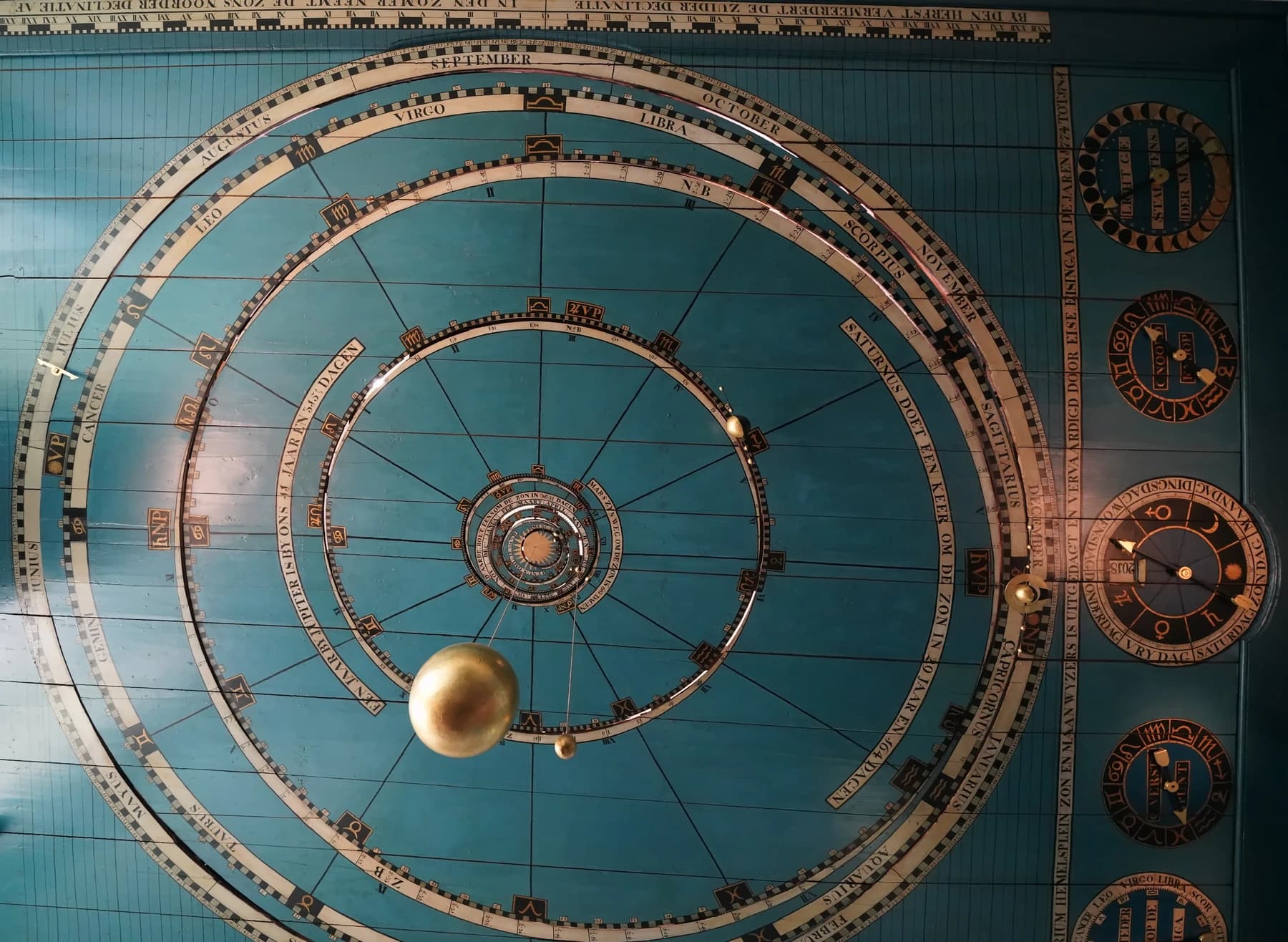
Look up in a small room in Franeker and the ceiling becomes an account of the solar system. Gold lines cross a deep blue surface. Small spheres occupy their measured paths. This is not a decorative astronomical theme added to a historic house. It is the visible face of a working instrument.
A room becomes an explanation
Eise Eisinga, a wool manufacturer with a deep interest in mathematics and astronomy, built the planetarium between 1774 and 1781. Its mechanical model represents the six planets then known, moving in relation to the Sun. The domestic setting gives the achievement an unusual intimacy. An idea often presented through enormous distances becomes something a visitor can begin to understand inside a room.
The continuing operation matters more than a loose claim that old engineering lasts forever. A mechanism requires winding, adjustment, knowledge and care. Its survival therefore belongs to successive custodians as well as its original maker. Keeping it working preserves a way of explaining, not simply a collection of original materials behind a barrier.
Working heritage requires present-tense care
Reserve through the planetarium’s official site, which requires advance tickets, or begin with its virtual visit. On site, attend to the relationship between the painted ceiling and the mechanism that moves it. The reward is an encounter with scientific thought made physical. It offers a useful alternative to treating value as possession: some extraordinary things become more valuable to us when someone keeps them understandable and accessible.
Source and context.
UNESCO: Eisinga Planetarium in Franeker, construction and significance ↗
Royal Eise Eisinga Planetarium: current reservations and virtual visit ↗
The photograph records the ceiling in July 2018. The historical model represents the planets known when it was made, not a complete modern planetary inventory. Current booking conditions should be checked directly.
Source checked 21 October 2026. WHV interpretation is distinct from the source’s account.
Explore Working Scientific Heritage & Public LearningFOLLOW YOUR CURIOSITY
Where this leads.
Different subjects. A reason to connect them.
Continue the idea
The instrument before the lesson.
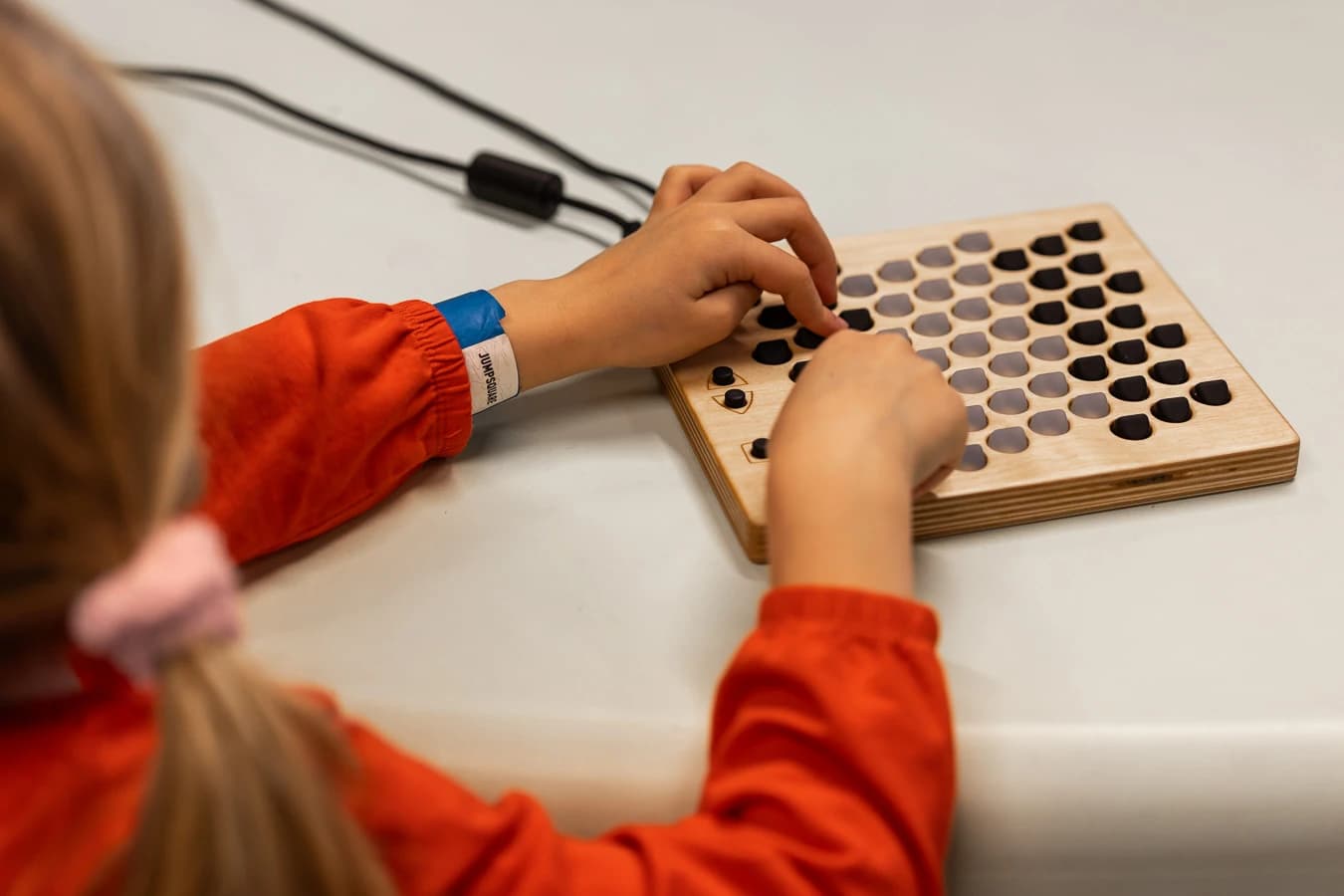
A contemporary music workshop offers another direct encounter with knowledge through a physical instrument.
Experimental Instruments & Participatory Music
Read the story
Across the WHV world
The binoculars that share a discovery.
Return from a mechanical model of distant planets to an optical tool for noticing nearby wildlife.
Optical Instruments & Assisted Observation
Read the story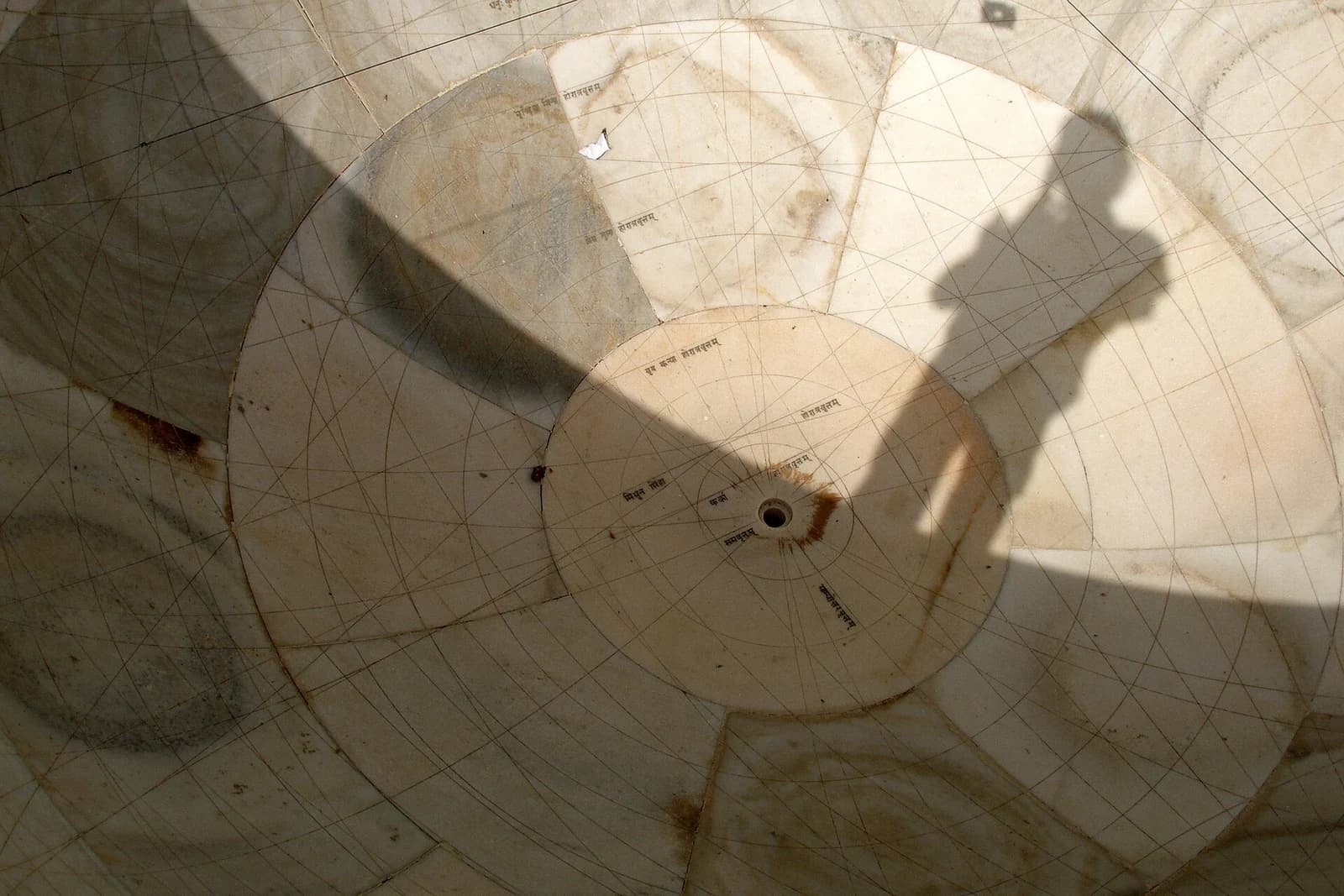
An unexpected connection
When the instrument is a place.
An astronomical site changes the scale of the same idea: a place can itself be a way to understand time.
Astronomy & Learning Journeys
Read the story